Why do we become attached to fictional characters?

The role of empathy in connecting with characters

I’ve previously written about the role of theory of mind in storytelling. This is our ability to put ourselves in someone else’s shoes, to understand their perspective even when it’s different from our own, and use that understanding to explain and predict their behaviour. Using theory of mind allows us to gain new insight into how other people, or society at large, think and feel.

Another related concept, which also influences our social and emotional connection with a story, is empathy. When we empathise with someone, we recognize and understand their emotions, we feel what they feel, and that ability is used when we read stories as well.

There have been various research studies showing that stories with emotional content, or a need to infer a character’s emotions or intent, leads to the activation of similar brain areas as experienced emotion (AbdulSabar et al, 2014; Berthoz et al, 2002; Ferstl et al, 2014; Gallagher et al, 2000). When we read, watch or listen to a story, this can trigger genuine feelings in us as we read it, which will then strengthen our engagement with the narrative.

A low risk relationship

The result of this emotional response to stories is that we can start to feel a connection to the characters within a narrative. This connection can build into what psychologists call a parasocial relationship. This term was originally coined to describe relationships where one person extends emotional energy and interest in a persona, such as a celebrity or media influencer, who isn’t aware of their existence, but it has been extended over time to include a figure who doesn’t exist, like a book or movie character. Our brains are so inclined to build these social connections that we become invested in the future of someone who can never actually reciprocate.

In some ways though, that lack of reciprocity makes it easier to invest in a connection. When we show that we care for a real person, we expect something in return – whether that be rejection or acceptance. When we enter into a friendship or a relationship, there are regular tests of that connection and a need to work to maintain it. Sometimes friendships drift apart or end badly;  we can feel like the effort wasn’t worth it or we can be broken-hearted by the loss.

But when we feel attached to fictional character, none of that matters. There are no real life expectations to meet and we can root for their success with no impact on our day to day lives. If they’re a character in a romance, we can imagine living in their world, without having to move on to the reality of a relationship, where managing the bills and the household chores take precedence over the giddy rush of falling in love. If they’re a character in an adventure story, we can imagine taking risks and facing danger, without ever leaving the safety of our home. The characters will never reject us or judge us and we’re always able to go back to the narrative that we fell in love with. They are safe and predictable in the emotions that they make us feel.

Why do we like certain characters more than others?

Our favourite characters are as unique to us as our own personalities, though the most popular characters often have traits that appeal to a wide range of people. Often the characters we like resonate with something about ourselves or our lives. They might have traits that we value and want to emulate, like the superheroes of the MCU; they might behave or think in the ways we look for in a partner, as with many of the love interests in romance stories. Or, they might be villains that we feel empathy for because we understand their point of view or sympathise with the circumstances that led them to their behaviour, such as with Frankenstein’s monster.

When I first read Terry Pratchett’s Discworld series, I fell a bit in love with Sam Vimes. He was a middle aged guard in the city of Ankh-Morpork, who had become disillusioned by his corrupt home and turned to alcohol to manage his feelings. Over the course of the books, he was inspired to turn things around and work to build a real police force, but he never lost his gruff edge. There was something about the way he wanted to do good and succeeded in his own way that just really appealed to me. No heroics or super powers, just a determination to catch the bad guys and do it by the book.

Another character I’ve always loved is Edward Elric from the Full Metal Alchemist manga series. He and his brother lost their mother and tried to bring her back to life. They failed and instead Ed lost his arm and leg, while his brother lost his whole body. Ed was determined to restore his brother, always looking out for him and never as concerned for his own loss, but he also had a strong moral code and was horrified in their journey at the damage others were willing to do for their own self interest. While his brother was always his priority, Ed was also willing to put himself at risk to help others – ultimately making a big sacrifice in order to save the world and his brother.

I also don’t feel like I can talk about famous characters without bringing up the Harry Potter series, but for the topic at hand, I would argue that Severus Snape is the most memorable character of these books. Some would say that he was poorly written: a cowardly bully who we were supposed to forgive because he helped Harry in the end. Others see him as a misunderstood hero, who sacrificed his reputation for the sake of the greater good. The different view points are what keeps him in our minds – the scenes with him standing out over others as we analyse his behaviour for signs of his underlying intent. This engagement with trying to understand his point of view is what builds our connection with him, even if our conclusion is that we dislike him!

How to create a character that readers connect with

There’s no perfect mix of traits that will make a reader feel attached to a character, just like there is no person who can be friends with everyone. Aspects that appeal to one reader may put another off entirely. But there is one thing that’s likely to help: keeping the reader guessing.

The biggest thing that engages a reader is needing to pay attention to details within the narrative. The more the character makes us think, the more we try to make use of theory of mind and empathy. This can be done either through individual scenes or through the narrative itself.

Most writers are aware of the guidance to ‘show, not tell’ and there’s a good reason for this. Being told that character is scared doesn’t tend to elicit emotion on its own, because it doesn’t give us the contextual clues that we use to make sense of emotions, and it doesn’t make us actively engage with what’s happening.

Take this quote from The Big Sleep by Raymond Chandler:

She slammed her glass down so hard that it slopped over on an ivory cushion. She swung her legs to the floor and stood up with her eyes sparking fire and her nostrils wide.

We as readers are forced to picture and interpret the character’s behaviour, activating similar brain areas as if she was in the room with us. This means that we’re more likely to ‘feel’ her anger as we read the book, even though the word anger isn’t used in the text.

The Big Sleep is a crime novel, so the narrative has characters double-crossing each other and revealing secrets, keeping the reader guessing along the way. But mystery within the narrative doesn’t have to be as integral to the story as that. It could be that the character doesn’t show their feelings right away, or they hint at a backstory that’s later revealed in detail. It could be that they go through a journey, developing their confidence or power or changing their perspective on the world, and the reader becomes compelled to see how their journey ends.

The most memorable characters make us work to understand them or connect with them. Their words or actions trigger those brain areas involved in theory of mind or empathy as we try to explain and predict their behaviour. If a character is part of a story arc that arouses our curiosity and they’re written in a way that ‘shows’ us their feelings, then readers are far more likely to connect with them, meaning that they’ll be remembered even after the story is over.

 About The Author

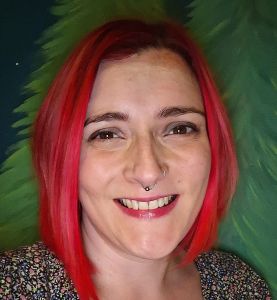
Caroline Ashley Author with red hair

Caroline Ashley is a clinical psychologist who works for the NHS in Scotland. She writes monthly articles on her website about the different aspects of psychology that relate to telling stories. She is also a fantasy writer and is currently working on completing her first novel. If Caroline had any spare time around work, writing and raising her two young children, she would spend it playing board games.

Navigation


Lost in the world of novel writing

I realised that it’s been a while since I posted on my personal blog. Things have been relatively quiet here. I haven’t entered many contests and there’s not been any new publications to update about. However, I did get the good news last week that I had received an honourable mention in the L Ron Hubbard Writers of the Future contest for the second quarter of 2024. This is a well-known international contest, so being recognised for my work is a big confidence boost!

Otherwise, I have mostly been working away at completing my novel.

Tentatively titled “Battle Scars”, it’s the story of a woman named Rebecca Mason. She nearly died five years ago when a man named Rafe McKendrick brutally attacked her. His twin brother, Erik, saved her by turning her into a werewolf and Rafe was exiled from his pack. Rebecca struggles every day to reconcile her human life with the supernatural world. And then one day, Rafe comes back, and he’s threatening not just her but her new found pack and all of werewolf society. Does she have the strength to stand against the man who nearly killed her?

The novel is now written and one of my lovely fellow writers is reading it to give me feedback. There’s bound to still be plenty of editing to do but having a finished novel feels almost within reach!

On top of that, I’m also working on the sequel, which has a different point of view character. A gamble maybe, because I know people like having a single protagonist to follow, but it feels the right thing for the series I want to tell, so hopefully it works once it’s written! My aim for this book in terms of writing skills is to improve my efficiency, getting it written within a faster timescale by doing more planning at the beginning instead of just pantsing my way through it 🙈 If I can write faster, I’ll be able to get more books written in the long run so it’s definitely worth making myself more organised!

Look out for another Storytelling blog post, which I will try to get completed this week if I can pull my focus away from the novel writing 😊

Navigation

How theory of mind leads to effective storytelling

Storytelling is all about sharing a point of view. When we read or listen to a story, we’re learning something about the perspective of the storyteller or their characters. Stories can make us feel connected to the protagonist; they can build anticipation for the ending; they can make us question our views of the world. But what is it that that makes stories so effective in triggering these thoughts and feelings?

What is Theory of Mind?

Communicating a point of view in a story starts with theory of mind. Every human has the capacity to put themselves into the mind of another, to consider that someone else might have a different perspective to them. We develop this skill as children, with some of us being better at it than others for various social, environmental and cognitive reasons. The concept of theory of mind relates largely to cognitive perspective taking. This means it relates to interpreting the thoughts, desires and intentions of others, which we use to infer reasons for their behaviour or to predict their behaviour. Psychologists describe it as a theory because it’s impossible to ever truly prove our assumptions about another person’s mind – we’ll never see or experience it the way they do.

Another related concept is empathy, which researchers describe as emotional perspective taking. This is our ability to recognise and understand the emotions of others, basically to put ourselves in someone else’s shoes and consider how a situation might make them feel.

Theory of Mind and the Role of Language

In my previous blog post Why Do We Tell Stories, I wrote about the power of language. We are the only animal that we’re aware of that’s capable of communicating complex symbolic meanings. We are capable of describing events that have never happened, or that we have never experienced, in order to express an underlying message to our audience.

In the same way, this linguistic ability gives us the framework for conceptualising the experience of another person. Other animals have been shown to have some theory of mind, for example, crows are able to infer that another crow may not have the same knowledge as them; chimpanzees and bonobos have shown some ability to infer the intentions and emotions of others. But researchers all agree that the theory of mind these animals evidence is far less than that of humans. We don’t really know for sure why that is, but there does seem to be a strong link between language fluency and the development of theory of mind and empathy.

As we’re teaching our children to speak, often we’re also teaching them something about theory of mind at the same time. For example, when my son starts crying and I ask “Are you sad?, I’m giving him the label that I use to describe that emotion in myself. If I’m combing his hair and pull too hard, I’ll say “Sorry, I didn’t mean to hurt you” and he’ll know that what happened wasn’t my intention. When I plan to have toast and realise there isn’t any bread, if I say “I didn’t know you and Daddy finished the bread”, I’m teaching him that my knowledge was different to his until I went into the kitchen. Language allows us to access the inner worlds of other people in a way that just wouldn’t be possible otherwise.

Theory of Mind and Storytelling

Another thing that researchers have found is that our brains are particularly interested in narratives. Partly, this is because they’re easier to remember: they have a structure that we can follow and a context that we can put them in. But it’s also because narratives have a social value. We tell stories to share information about ourselves or our experiences, and we find stories engaging because there’s an evolutionary advantage to being given the information that others want to share. In the past, that might have been information about food sources, or whether other people were trustworthy, or signs of a predator. Now, our stories might be more complicated but we still listen to them to build our social understanding.

Brain imaging studies have shown that when we listen to narratives rather than just unrelated verbal information, different areas of the brain are activated. This extends even to fictional stories. When we are told about the thoughts, feelings and behaviours of a character, our brains work to take their perspective in the same way we would with a real person. In this way, simple stories can be used to help children to practice theory of mind and develop their social and emotional understanding of others, while adults can emotionally connect with characters, allowing stories to take on more meaning and become more memorable.

Point of View

Within storytelling, there are three main points of view that a narrative can take:

First Person:

This is the point of view that you’re most likely to hear in stories told during your everyday life. It is a story where the narrator is also the protagonist and they are telling you about something that happened to them e.g.:

I did the only thing any reasonable wizard could have done. I turned around and ran like hell.

Jim Butcher

Second Person:

In this point of view, the narrator turns the reader into the protagonist, speaking as if the reader themselves were the one who experienced the narrative.

You’re still trying to decide who to be. The self you’ve been lately doesn’t make sense anymore; that woman died with Uche.

N.K. Jemisin

Third Person:

The most commonly used point of view in fiction, third person provides the reader with a camera through which they can see the action happening to the characters in the narrative. This perspective is similar to our usual life experiences: we watch others as they speak and act, separated from them unless they tell us their own first person account.

Bilbo was very rich and very peculiar, and had been the wonder of the Shire for sixty years, ever since his remarkable disappearance and unexpected return.

J.R.R. Tolkien

How do theory of mind and point of view interact with each other?

Each different type of point of view invites the reader to engage with a narrative in a particular way and each will require different aspects of theory of mind.

In first person POV, we’re being told someone’s story. They’re making a direct attempt to share something of themselves with us. This taps into our social desire to engage with, empathise and understand those around us, and to build human connections.

In second person POV, the narrator asks us to imagine that we are the protagonist, to put ourselves in the narrative. This is a tricky one to get right, if the actions of the character are too far removed from what we think our own might be, but it can have the powerful effect of leaving us feeling like we personally understand the experience of the story.

Third person POV draws on the skills we use every day in observing those around us but often with the added element of access to the internal experiences of the characters, which generally makes us feel more emotionally invested in them.

The point of view that is most effective for the narrative being told is dependent on the aims of the storyteller, but all of them take advantage of our ability to take the perspectives of the protagonists and empathise with their experiences.

Navigation:

About the Author

Caroline Ashley Author storytelling blog

Caroline Ashley is a clinical psychologist who works for the NHS in Scotland. She loves fantasy in all forms and is fascinated by the ways in which the fantasical can speak to our everyday lives.

Nearly one year on…

My first blog post on this site was published on the 9th May last year, when my daughter wasn’t even two months old. She’s now had her first birthday and I’m about to head back to work – into the breach of NHS Child and Adolescent Mental Health. While I find my work rewarding, it’s also stressful, demanding and time-consuming. I would love to live in a world where I could be paid enough to write fiction and stay home with the kids (with a few days of nursery included – the kids are also stressful, demanding and time-consuming 🙈)

Last year, when I started this, I wasn’t sure how far I would get with it, what with looking after a newborn while also having a toddler to parent. Now I wonder if I can keep the momentum now that I have a toddler and a preschooler and also need to go to work!

The traffic to my site is still small numbers. I’m hoping to get more shorter fiction published and improve that, but the route to publication, even for short fiction, is full of rejections. I’ve also considered writing a proper blog incorporating some of my psychology knowledge, but is that just another thing that distracts from writing the novel? 😅

If you would like to read my published short fiction, you can find it here

Sci-fi is difficult to write!

This update is late, I know!

At the beginning of the month I decided to get a draft completed for one of the sci-fi stories that I’m writing for Globe Soup’s latest contest, thinking it would just take me a few days. How wrong I was. Who knew how much research would be required to write a short story related to terraforming? (Probably most people, I imagine 🤣) First I had to decide where was being terraformed, how it was being terraformed, how the characters were surviving pre-terraformation, as well as working out the story within that! Thankfully I do have a draft now but I definitely didn’t enjoy expanding my scientific knowledge and I’m not convinced it’s my strongest idea. Sadly, I also got a ticket for time travel so I’m going to have to get all sciency again before the end of the month 😭

On a more positive note, my story on 50-WordStories was chosen as story of the month, so that gave me a wee mental boost as I waded through Wiki articles on how to extract oxygen for life support systems 😄

My mind has drifted a bit from my focus on George Square due to the contests I’ve been preparing for lately – I’m not sure if that’s a good or a bad thing. On the one hand, the contests are helping me to hone my writing skills. On the other, novel writing is much more my preference over short stories and I only have so much time for writing. The problem is that a completed short story gives me a much quicker sense of achievement than trying to type my way through tens of thousands of words!

I know not many of you are reading this, so I’m sure there won’t be a momentous backlash, but I’m thinking that I’m going to skip a month of writing George Square to get my short story commitments completed – then I will hopefully power through the next few chapters. So next month may just be a wee blog post to update you on my activities but I promise normal programming will resume the following month 🙂

Or check out my published short fiction here 🙂

Merry Christmas Everyone!

Once again, it’s time for my monthly update. Trying to put your writing out there in the world can be a bit of a rollercoaster for your emotions. As I mentioned last month, I wrote a story for a historical fiction contest and was pretty proud of it by the end, but didn’t score within the top 10% of entries. Logically, I know that the outcome doesn’t mean I wrote a bad story, but it does knock your confidence when you don’t get the recognition you hope for. I’ve also had a few rejections from online literary magazines this month, which hasn’t helped either!

However, I try to remind myself that it’s a slow process, a marathon not a sprint as they say! Writing short fiction is a means to an end for me in some ways – it helps me to hone my writing skills and also to get my name out there for my work. While I enjoy writing the shorter stories, I have far too many novels in my head to let it take up too much of my time.

On that note, George Square has been a bit of a nightmare this month. I am generally what is known in writer’s circles as a ‘pantser’, though I’m not that keen on the word. I work stories out as I go, with vague ideas floating in my head to give me a sense of the direction I’m going in. Unfortunately that hasn’t been going as well for me lately and my progress with George Square has really slowed down. So, in a change to my normal strategy, I’ve actually made a planning document! To be fair, it’s written in the vague way that I generally think so it’s in no way a proper structured outline for the remainder of the book but… I do now feel that I have a clearer idea of where the next few chapters are going, which should hopefully help to speed up my process again. Fingers crossed!

One thing that I struggled a bit with was how much to keep back from the reader. The story could have been drawn out as more of a mystery about who is involved but I’m not sure that format worked for this story. Or maybe it was just that I don’t trust my own ability to sustain a mystery and make it clear why the characters weren’t working things out right away! Hopefully the approach I’ve gone for works for those of you reading it 🙂

For my final note, I just want to wish everyone who happens to read this a very Merry Christmas and a Happy New Year. It has been a challenging year for everyone for various reasons but hopefully 2023 will see a change in fortune for us all 🙏

Take a look at my short fiction here