In my previous blog post The feral child archetype: stories and themes in real life and fiction, I introduced the concept of character archetypes that keep arising across different societies. Carl Jung believed that these archetypes represented elements of our psyche, coming to life within the stories that we tell each other.
Because archetypes are found in so many stories, everyone holds certain expectations about how these characters will behave when they are used in fiction. Writers can use these expectations as a tool to strengthen a narrative by using archetypes that speak to the themes that the writer is trying to convey. However, if they’re used poorly, a writer can risk their story simply sounding clichéd and derivative.
This blog post is about my favourite character archetype: The Trickster. They are the black sheep of the family; the jester in the court; the cause of the landslide falling down toward the village below. They are characters who are often morally ambiguous. If your life was made better by the trickster’s behaviour, was that intentional or just a by-product of them achieving their own goals? In folklore, tricksters aren’t the kind of gods that you welcome into your village, because you never know what chaos will follow them. You’re as likely to see your house burned to the ground as you are to see any benefit of their presence.
What is the trickster archetype?
The concept of the trickster is so endemic across society that Carl Jung listed the character as one of the archetypes that live within our collective unconscious. Jung’s Trickster is said to represent the irrational and chaotic elements of our personality. His role is to bring these elements to the surface. In doing so, he highlights the inconsistencies and humour in the lives we live.
Within folklore and mythology, the trickster character is a study in contrasts. Tricksters are rogues and thieves but they are also lovable scoundrels who bring a sense of playfulness and joy to a story. They are cunning and duplicitous but they are also often outsmarted and punished. They straddle the boundary between right and wrong, stability and chaos, and it depends on the story which side of the boundary they will fall.
Tricksters also speak to the absurdity of life. We live in a world where life inevitably leads to death; where pain and suffering are as endemic as happiness and laughter. Within stories the trickster often speaks to the unfairness of the world, but he laughs about it along the way, softening the underlying message of our lack of control over an uncaring universe.
Tricksters from myth and fiction
Tricksters can be found across the world, some more well known than others.
Loki – if you’re a fan of the MCU then you’ll already be familiar with Loki, the Norse god of mischief. Loki could change his shape and his sex. He was sometimes known to work with the gods and at other times he worked against them, the definition of disorder within Norse mythology. He frequently uses his cunning to solve problems for the gods, though on several occasions he had caused the problem in the first place. He becomes increasingly antagonistic toward the gods, eventually being bound and tortured until Ragnarok, when he would escape and contribute to their defeat and the rebirth of the world.
Maui – A Polynesian folk hero who was brought into mainstream awareness when he featured in Moana. Maui’s stories were told across most of Polynesia: he was known for bringing fire to humankind; pulling the islands from the ocean with his hook; and slowing down the movement of the sun. Maui’s stories frequently have him outwitting the gods to change the world for the betterment of humankind.
Anansi – the spider trickster of West African myth, Anansi is a crafty trickster who can fool humans, animals and gods alike, generally for the purpose of making his life easier and others’ lives more difficult. Legends say he helped give humankind the sun, moon and rain, as well as writing and agriculture.
Coyote – across Native American myth, several animals have trickster stories associated with them, including Raven, Bluejay, and Rabbit, but the most well known is Coyote. Not all Coyote stories agree with each other, but they all speak about a similar character. Coyote is known for such things as impatiently tossing the stars into the sky to form the milky way and making death permanent because he believed there wasn’t enough food for everyone to live forever.
Eris – the Greek goddess of discord. She is most well-known for starting a fight between the other goddesses after she wasn’t invited to a wedding, which ultimately led to the Trojan war.
Matilda – a child-friendly trickster story of a clever girl with special powers who uses her cunning to play pranks on the abusive adults around her. Their crimes are found out and she ends up living a happy life with her teacher.
Jack Sparrow – in Pirates of the Caribbean, Jack Sparrow takes on the role of a trickster. He is a cunning character who cares only for his own self interest. He helps others when it benefits his goals and he always seems to escape any significant consequences for his actions.
Deadpool – the fourth-wall breaking anti-hero of the Marvel Universe, Deadpool often sits on the edge of good versus bad, his actions generally driven by his own impulsive urges rather than any long term plan. He has a regenerative healing factor so he throws himself into danger, with little need to care about the consequences. Deadpool often speaks to the audience in his stories, cracking jokes and making fun of the narrative as well as the wider comic universe.
The features of a trickster
There are certain features that tend to define tricksters across the world:
Their motives are ambiguous or fickle
Often they make impulsive choices based on their own needs and wants, and it’s never clear how much they intend to help or hinder those around them. In African myth, Anansi decided that he wanted to become wise, so he gathered a bit of wisdom from everyone in the village, storing it in a gourd. He tried to climb a tree to hide his wisdom with the gourd on his belt. When his son saw Anansi struggling, he suggested wearing it on his back. Anansi realised that even with all that wisdom, his son was still wiser than him, so he cast the contents of the gourd away, thus spreading wisdom all across the world.
They play tricks
Tricksters are cunning and devious. Their stories often involve them manipulating those around them, sometimes to meet their own needs, sometimes to make fun of their victims and knock them down a peg or two. Esu, an African god, once intervened when two farmers promised never to argue. He wore a hat which was black on one side and white on another and after causing the farmers to argue over the colour, then turns it inside out and tells them it’s red. There is a Coyote story where he goes to the Frog People, who hold control of all the water. Coyote doesn’t like this, so he asks for a drink, which they allow, but while his head is under the water he makes a hole in the dam, allowing the other animals to drink freely and creating all the rivers and waterfalls.
They are masters of disguise
Some tricksters, like Loki, are shape-shifters who change form to trick those around them. Others, like Coyote, might use disguises to hide who they are.
Messenger and antagonist of the gods
Tricksters often have a close connection with the gods but whether they help or hinder them very much depends on the trickster’s mood during that particular story. Take Loki, for example, in one story he cuts off the goddess Sif’s golden hair as a prank but when he is caught, he travels to the dwarves and lavishes them in praise and false promises so that they will produce a cap of golden hair to replace it.
Their actions disrupt the status quo
Often after a trickster story, something about the situation they were in has fundamentally changed, like fire being stolen from the gods by Maui, Prometheus or Coyote; or wisdom being shared with humanity by Anansi. There is a story in Norse mythology where Loki causes the death of Baldur, a god of light and purity, known for his kindness and wisdom. There was a prophecy about Baldur’s death and his mother tried to avoid it by making every entity vow not to harm him. She didn’t ask mistletoe though, and when Loki heard this he tricked Baldur’s brother into firing a mistletoe arrow and killing Balder. Baldur’s death, the death of light and truth, is the first step towards Ragnarok, where the world will be destroyed, to rise again renewed and cleansed.
What are the themes in trickster stories?
Even the smallest among us can change the world
One example of trickster stories being used to inspire comes from Anansi. With the rise of the slave trade, Anansi became a symbol of slave resistance – the representation of a strategy to turn the tides on powerful oppressors. Anansi’s stories were also a connection to their African heritage and a means of retaining their identity. By telling stories about a character who could shape the world despite not being powerful, slaves were able to hold on to a small piece of their agency in a time when their slavers sought to take it from them.
Those in charge aren’t always right
Trickster stories tell us that conforming to society’s rules isn’t always the best thing to do. By breaking the rules and challenging authority, sometimes we can create a better world to live in.
You don’t have to conform to be happy
tricksters throughout the world stand out from the crowd in various ways. They change shape; they’re promiscuous; they’re impulsive; they don’t think about the consequences of their actions. And yet, they are generally happy characters. They are content in who they are and find power in being different, often actually looking down on those who do try to conform to the rules and boundaries that the trickster is often breaking.
There is a cost to challenging authority
Trickster stories also warn us of the consequences of being the one who challenges the status quo. Even when tricksters succeed at their goal, they can be ostracised or punished for their actions by the gods, animals or people they have tricked. Maui dies trying to achieve immortality; Loki is tortured until Ragnarok; Prometheus is cursed to have his liver perpetually eaten by an eagle. There is a freedom to acting on your impulses, to doing as you please and having no respect for authority, but it also makes you an outsider. People generally don’t like change and they may not thank the person who causes it.
Are tricksters still relevant today?
Here in the 21st century, there is still a need for someone who helps us to find our voice within the crowd. In the public sphere, there are debates over transgender rights and we question what it truly means to be a man or a woman – or whether the distinction is even necessary. This is something that trickster stories have been touching on for centuries. Many tricksters are male but they are often shown to be comfortable in female form (Loki, in fact, while generally presented as male, is also a mother to the eight-legged horse Sleipnir). This crossing of the boundary between male and female showed that societal expectations for men and women were as subject to challenge by the trickster as any other boundary and no more static than any other aspect of society. In this modern world where gender definitions and expectations are increasingly varied, perhaps a trickster, who has no concern for gender or for societal expectations of sexuality, is the kind of character who might speak most strongly to those trying to work out how they slot into society.
The same might be true for neurodiversity. We are more aware of neurodiversity than ever before and diagnoses of ADHD and ASD are at an all time high, but what those labels mean in terms of who we are and how we fit in the world is still unclear for a lot of people. The tricksters can be impulsive, hyperactive, unconcerned with social niceties, more concerned with their own agenda than anyone else’s and often live on the edge of society. They are the odd ones out and they don’t care, because they are comfortable with who they are. Characters who show us how to be confident may lead the way in helping us find confidence for ourselves.
Linking back to Jung’s theories, there are parts of the trickster archetype in all of us. The trickster inside demands that we rail against discrimination; that we challenge those in authority to accept our differences and to move with the times; that we give into our impulses and just do as we please. But the trickster also knows what it costs to take on that role and that society at large will not always accept difference – it takes a level of bravery, and sometimes foolishness too, to not care what others think.
In the end, we write stories about tricksters to help us to reconcile those two sides of the coin – characteristics of the trickster are necessary to prevent our society from stagnating, but they are also to be feared, because who knows what the consequences of those actions might be?
Navigation:
Previous post: Using simile and metaphor to write effective stories
About the author

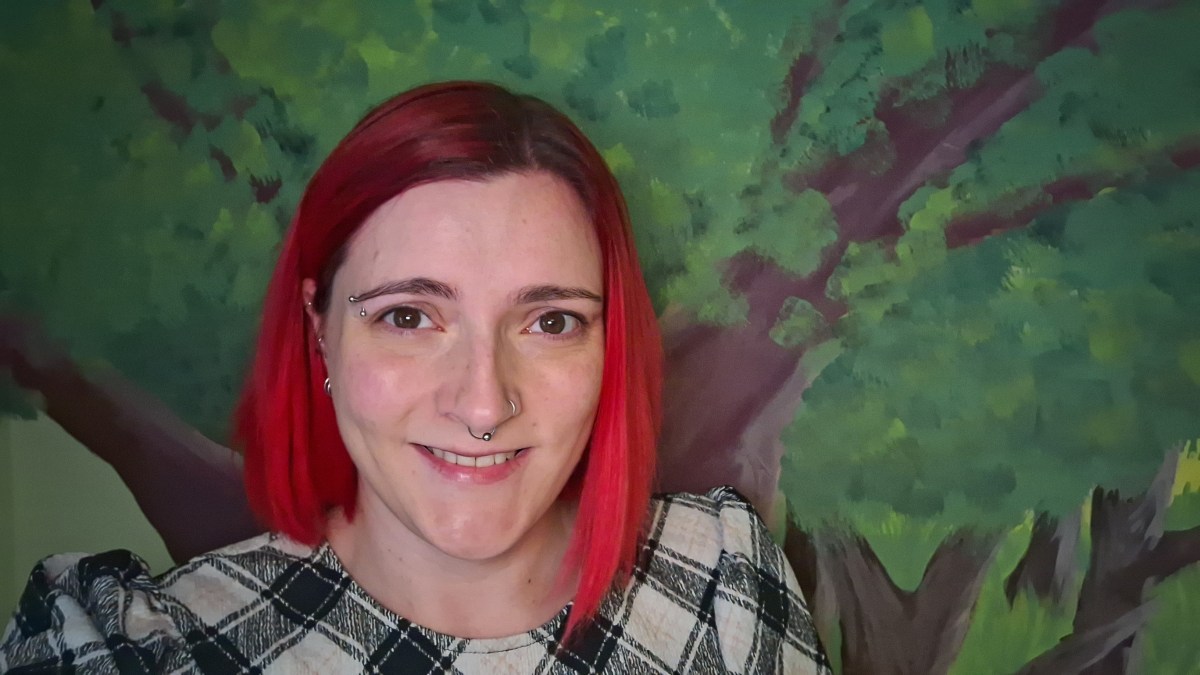
Caroline Ashley is a clinical psychologist who works for the NHS in Scotland. She loves fantasy in all forms and is fascinated by the ways in which the fantasical can speak to our everyday lives.











 Caroline Ashley