Using simile and metaphor to write effective stories

We humans are masters at storytelling. We search for patterns, meaning and similarities in everything around us. We structure our experiences in ways that help us to make sense of our world and how it works. And then we tell our ‘stories’ to our family and friends, or our online followers, in an attempt to share a little of what we’ve learned from life.

Telling memorable stories

There are certain rhetorical devices that writers can use, techniques that help them to keep a reader or listener’s attention and build their investment in the story.

One example of this is the use of personification and anthropomorphism, which I talk about further in The Use of Anthropomorphism in Fiction. In these cases, the writer imbues human characteristics either literally or figuratively in animals or inanimate objects in order to emphasise their themes or say something about their characters. When we think of something as being like a human, we inevitably feel more connected with it, because we can use our own experiences to empathise and make sense of their behaviour.

Another way that writers can achieve a similar goal is through the use of simile and metaphor, which can be used to strengthen descriptive images.

What are simile and metaphor?

Simile and metaphor both involve using figurative language to compare one thing to another, but function in slightly different ways.

When a writer uses simile, they describe an object by comparing it to something else using ‘like’ or ‘as’. Some examples would be:

Oh my luve is like a red, red rose.

Robert Burns

His smile was as stiff as a frozen fish.

Raymond Chandler

When a writer uses a metaphor, they describe something as if it were something else. For example:

All the world’s a stage, and all the men and women merely players.

William Shakespeare

My thoughts are stars I cannot fathom into constellations.

John Green

Metaphors can also be extended to compare two things on more than one level. An example for this would be ‘Hope is a Thing with Feathers’ by Emily Dickinson, where the whole poem is an extended metaphor describing hope with bird-like features.

Metaphors are generally considered to be more impactful than similes, because they assert that the objects in question are essentially the same as each other. Similes on the other hand function more as a suggestion to us, they plant an idea in our heads but leave us to imagine the details. Take for example “My anger is a raging fire” versus “My anger is like a raging fire”. In the first, we picture a literal fire and connect it with the character’s anger, whereas in the second, we picture the features of a fire – hot, hard to control, destructive – and consider what parts link with the character’s emotion.

Both devices have their place in a story. If a writer were to spend the entire narrative just using metaphors, we’re likely to disengage, feeling that we’re being told what to think. But equally, if they only use simile, the writer risks losing their voice, relying on the reader to infer the majority of the description. Good fiction uses the right one at the right time in order to strengthen the narrative and immerse the reader in each moment.

What makes a bad metaphor or simile

Similes and metaphors don’t always work well when they are used. We might read one and just feel that it doesn’t work, doesn’t help us to better picture the image, or just that it takes us out of the story for some reason – here are a few reasons why that might happen:

It’s a cliché

We all know some clichéd similes and metaphors: dead as a doornail; fine kettle of fish; wipe the slate clean. And there are two reasons why we find them jarring in fiction. Firstly, because we know them so well, and have heard them in other contexts, we no longer imagine them figuratively, which means that they lose their impact. Secondly, often these clichéd comparisons have lost some of their meaning over time because our way of life has changed – doornails were hammered so deeply you couldn’t easily remove them; fish kettles were long saucepans that used to be common kitchen utensils; and a clean slate comes from wiping a writing slate clean in classrooms.

The objects being compared are too alike

When this happens, the comparison becomes redundant and just doesn’t add to the story. An example might be saying that bubblegum popped like a balloon – both pop in fairly similar ways, so what does the comparison add to the image?

It doesn’t fit with the tone/atmosphere

Figurative language can throw us out of a story if it evokes an image that doesn’t fit well with the scene that we’re reading. An example of this is in City of Bones by Cassandra Clare, when the main characters are in a nightclub and one is being watched by a vampire:

Around her neck was a thick silver chain, on which hung a dark red pendant the size of a baby’s fist

While the comparison might be accurate for what Clare is describing, how does the image of a baby add to the dark tone that she’s already established?

Another way that a simile or metaphor might break the atmosphere is to refer to something that wouldn’t exist in the time of the narrative. For example, referring to the speed of a bullet or the ticking of a clock in a story where those haven’t been invented yet. While mentioning them in the narrative might not technically be anachronistic, depending on the narrator, they serve to make us think about the modern world when the writer wants us immersed in the past.

What makes an effective simile or metaphor?

Being true to the narrative voice

The strongest similes and metaphors will fit well with the voice of the narrator. This would include consideration of the story’s setting, its tone, its themes and things that the narrator is likely to know. Take for example this quote by Terry Pratchett in Mort:

Ankh- Morpork is as full of life as an old cheese on a hot day, as loud as a curse in a cathedral, as bright as an oil slick, as colourful as a bruise and as full of activity, industry, bustle and sheer exuberant busyness as a dead dog on a termite mound

All of the comparisons made are of things that might be found in a pre-industrial revolution city like Ankh-Morpork, so they fit with the narrator’s level of knowledge. They also fit with the humourous tone of the book by using examples that speak to the unrefined, crime ridden nature of the people within the city.

Another example comes from Philip Pullman’s The Golden Compass:

Because Lyra now realized, if she hadn’t done so before, that all the fear in her nature was drawn to Mrs. Coulter as a compass needle drawn to the Pole

Since this book focuses on Lyra’s use of a device called an alethiometer that looks like a compass and responds to human intent, this simile fits well with Lyra’s viewpoint, using a comparison that is related to her recent experiences.

Any good metaphor or simile considers what their narrator or viewpoint character might think of when making a comparison. A good story remembers that the story is not just written for the reader but written by a narrator and if that narrator is from a certain time period or country or world then the figurative language they use should also exist within that context.

The importance of specificity

A lot of the most cliché similes and metaphors are quite general, for example, “quiet as a mouse”, “life is a journey”, “cold as ice”. While these comparisons do give some extra information, they don’t evoke a strong image or clear idea of what the writer is trying to convey. If they weren’t already well-known, they would be unlikely to stick in our minds after being read.

Effective similes and metaphors add a level of specificity. If the comparison evokes an image of a certain moment or emotion, then it’s easier for the reader to picture. Compare “quiet as a mouse in a house full of cats” or “cold as the ice on Triton” to the more well-known examples.

But we can also look to literature for examples of specificity adding more than just additional imagery:

Time has not stood still. It has washed over me, washed me away, as if I’m nothing more than a woman of sand, left by a careless child too near the water.

Margaret Atwood, A Handmaid’s Tale

He looks like right after the maul hits the steer and it no longer alive and don’t yet know that it is dead.

William Faulkner, As I Lay Dying

Both of these examples describe an actual moment that the reader can imagine, thus strengthening the image that they are trying to evoke. They also weave in additional elements that speak to the emotions that the writer is trying to convey – the detail of being left by a “careless” child speaks to an idea that there may have been a way to be more careful, to defend against the waves of time. And with Faulkner, the example is of an animal caught off guard, still processing the impact of a sudden, negative change.

Remembering not to overdo it

A good writer thinks about what parts of their story are most important and would benefit from the emphasis of figurative language. Every piece of figurative language involves needing to access information about the object being compared and what we know about it, in order to understand the meaning beneath the comparison. If there are too many in a short space of time, we essentially become fatigued and lose interest. Or, if figurative language emphasises a part of the story that isn’t that important, we can also be left feeling unclear about what point the writer was trying to get across.

Deciding what works for the story

Any ‘rule’ of writing is made to be broken. However, there is a difference between just not knowing the rules and making a conscious decision not to follow them. In the same way that a skilled chef might deviate from a recipe because their taste buds suggest something different, a skilled writer can learn to subvert reader expectations and break the rules in ways that strengthen rather than weaken their story.

Navigation:

Defender of the forest

Just a short post to say that Roi Fainéant Press have published a flash fiction story that I wrote called Defender of the Forest. It’s a story about growing up and moving on from the games of our childhood but still holding on to the stories that we told.

I originally wrote ‘Defender of the Forest’ for a submission call by Space Cat Press on the theme of ‘Into the Forest’. It wasn’t accepted but I edited it afterwards and tried elsewhere. Many thanks to Roi Fainéant Press for publishing the new improved version 😊

Navigation

My latest story – Granny Beatson

Spillwords are showcasing my latest story, Granny Beatson, in the featured section of their website 😊 This is the third time they’ve published one of my stories and I’m very grateful to them for their support!

This story was originally written for Globe Soup’s Open short story competition last year and received an honourable mention. One of the reasons that I enjoy the Globe Soup community is that they do take the time to recognise the top 10% who enter their contests, as it gives you that little bit of feedback that you’re on the right track and your writing might be worth sharing. I did subsequently enter this story into another contest, where it didn’t place, but that’s the joy of writing! 🤣

Granny Beatson is the story of a girl and her grandmother and how their relationship changes as she grows up and her grandmother grows older. Because it’s me, there’s also a little dash of fantasy, with a ritual to the fae that binds them over time.

It was a difficult story to write because while it wasn’t autobiographical, it did bring up memories about my relationship with my nana and how it changed as I grew from a child to a teenager and she became less able. She passed away when I was still a teenager and I do look back and wish sometimes that we could have had a relationship when I was older, wiser, and less caught up in growing up and moving away from my roots. We certainly weren’t as close in my teenage years but I do fondly remember my childhood visits and sleepovers at her house.

I hope you enjoy reading my story and maybe that it inspires you to reflect on your own childhood and your relationship with your grandparents.

Over the next few weeks I’ll be working hard to finish my entries to Globe Soup’s Genre Smash and I’m also hoping to pull something together for the Commonwealth Short Story Prize.

Navigation

The feral child archetype: stories and themes in real life and fiction

What is an archetype?

In a previous post, ‘What is a story?’, I talked about Christopher Booker’s seven proposed story archetypes. These archetypes describe the narrative structures that are most commonly seen in the stories that we tell. Brooker’s ideas were informed by the psychiatrist Carl Jung, who introduced the concept of a collective unconscious, an ancestral memory of different concepts that influence our behaviour and which echo across the world in our stories. Jung’s focus was on the development of the human psyche and, as a result, his proposed archetypes tended to focus more on characters rather than narratives. While some of his work might seem outdated now, these characters still persist within our stories.

The wild child through history

Most people will be familiar with the concept of the feral child. A child who has lived from a young age without human contact, usually raised by animals to connect with the wisdom of the wild. This concept can be found in literary fiction and in mythology across the world.

Enkidu, a character from the Mesopotamian Epic of Gilgamesh, is the oldest known example of a wild man. He was created by the goddess of creation and roamed free with the herds. When he copulates with a prostitute, the animals smell the human scent on him and reject him, forcing him to learn the ways of humankind. Romulus and Remus, the twin founders of Rome, are well-known by their story of having been suckled by a wolf before being adopted by a shepherd and his wife. The Iranian šāhnāmeh (‘Book of Kings’) has Zaal, a mythical king who was rejected by his father and raised by a simurgh until his father realised the error of his ways.

A more modern example is Mowgli from Rudyard Kipling’s ‘The Jungle Book’, although many will also be familiar with him from the Disney adaptation. The book’s story is one of a boy who is abandoned and finds himself part of both human and animal worlds. His last story, before he departs from the jungle to live with Man as an adult, talks about Mowgli’s sadness and tears, something that separates him from his animal companions. While he accepts that he belongs in the world of Man, this acceptance can be seen as a loss, much like children have to give up aspects of freedom and play to grow into adults.

Edgar Rice Burroughs’ Tarzan, on the other hand, is a tale of escapism from the perspective of a masculine White man who is stronger, faster and smarter than the humans and animals around him. His survival skills and connection with the jungle rise him up above his enemies but he retains enough of a connection with his Western upper class heritage to live as he pleases in the human world.

‘Where the Wild Things Are’ by Maurice Sendack is a children’s book about a ‘wild child’. The concepts are more allegorical but still similar – Max journeys in his dreams to become King of the Wild Things, then returns home, having gained a level of mastery over himself, and become stronger because of it.

The real feral children

The reality of children living with animals is far less entertaining. The human brain has critical periods of development which, if missed, can lead to long term disability.

The real life inspiration for Mowgli, Dina Sanichar, was found living with wolves as a six year old. Hunters killed the mother wolf and took him to an orphanage. He learned to walk upright, put on clothes and use a plate but he never learned a language or how to fit in with human society.

Oxana Malaya is assumed to have lived with dogs from the age of three to eight after her alcoholic parents abandoned her. Discovered in 1994, she was able to learn to talk and walk upright but still lives in an adult care facility now. The similar story of Ivan Mishukov has a happier ending. He lived with dogs in the city for two years from around four and was later taken in by a loving foster family and able to reintegrate into society.

Another man, Marcus Pantoja, lived with wolves for twelve years in isolation after being sold by his abusive stepmother to a man who subsequently died. He recalls living among the animals and being able to communicate with them. In reality, he probably projected social intention on their actions in order to feel less alone – they would come when he had food, and he would see it as friendship. Marcus was seven when he ended up alone in the mountains, so had learned enough language to be able to rebuild his skills when he returned to society, but he has always struggled to adapt to the human world. As recently as 2018, aged 72, he voiced that he still wished he could return to the mountains.

What do stories about feral children try to tell us?

These real life stories and examples from history suggest various themes that might arise in a narrative about a feral child.

Survival:

Both the real and fictional characters  raise the question of how to survive when society has rejected you or left you behind. We are social creatures and for most of us the thought of complete isolation is a scary prospect. Fictional narratives tell us that we can survive rejection and find a place to belong, though the reality often tells us the opposite.

Found families:

In many cases of feral children in fiction, the animals that raise them become their families. Often they have human traits, are able to speak and behave like the people whose role they’ve fulfilled for the child in the story. As such, these narratives tell us that even when our biological family cannot look after us, others will take their place and we won’t be alone. The simurgh who takes in Zaal, for example, comes at his call to offer help even after he returns to his father.

The differences between humans and animals:

In a story that begins with a child being abandoned, it’s animals who ensure that he or she is cared for. They don’t judge or threaten – they offer food, companionship and protection when no human offers it. In real life, the best example of this is probably with animals that are used to living with humans to begin with. For example, the dogs that Ivan Mishukov lived with tried to defend him from the police and were killed when they kept trying to reach him in the orphanage he was taken to. The implied message underneath this animal behaviour in stories is that humans aren’t always capable of the same unjudging acceptance – humans develop prejudices and flaws and mental health difficulties that prevent them from offering the human connection that their loved ones might need. In the midst of that, many would say that the uncomplicated love of an animal is a welcome comfort.

Our ties to human society:

Even stories like Tarzan that include a return to the jungles, make it clear that living forever with the animals isn’t feasible. Mankind have separated ourselves from animalkind and no matter how long we live in the wilds, we must eventually accept that we are in some way different from our animal companions. Most stories featuring a feral child involve that child returning to human society, sometimes with difficulty, though often as a stronger, more empowered individual for having reconnected with their wild roots.

The beauty and simplicity of nature: This concept is usually in contrast to the complexity and potential cruelty of human society. Living in the wilderness is presented as a more simplistic way of living. That doesn’t necessarily mean that it’s safer, and often there are a lot of survival related dangers in the wilderness, but they may be presented as being easier to navigate, the enemies forthright and open about their intentions. In Mowgli’s story, he is cast out for witchcraft when he first tries to reintegrate with humankind and his adoptive parents are tarred with the same brush, prompting him to send animals to help them. Marcus Pentoja has consistently said that he struggles with human society and found life among the animals far easier to navigate.

Power in difference:  

Surviving in the wilds often leads to the main character being stronger and more able than many of the humans they encounter. Tarzan for example, frequently bested humans who tried to threaten him or his family. Zaal gained wisdom from being raised by the ancient simurgh. As the narrative goes, survival in the wilderness empowers the main character, to be stronger than the humans who rejected them, through connecting with their animal nature. But it may also show that being different than those around you can be to your advantage – the outcasts, the rejects, they can overcome their bullies because they have their own unique skills.

The strength of the archetype

Archetypes play a role in setting reader expectations and they are a shorthand tool that a writer can employ in order to communicate the themes of their story. They have been used within stories likely since stories began to be told. Used well, they can strengthen a narrative by speaking to the themes that the writer is trying to convey. However, used poorly, they risk coming across as clichéd and plagiaristic.

The most important factor in using them to their full potential is being clear about the themes that they evoke when they’re introduced into a narrative. Those themes need to tie well with the story being told so that it’s clear why the character is there, or else the reader may find the story unfocused, or assume that the writer is being lazy by relying on the archetype to define their character for them.

Navigation

 About the Author


Caroline Ashley is a clinical psychologist who works for the NHS in Scotland. She loves of fantasy in all forms and is fascinated by the ways in which the fantasical can speak to our everyday lives.
Behold, a new web address!

After around eighteen months of updating this website, I’ve made the decision to commit some money to its maintenance and now have a shiny new web domain. Upgrading my WordPress account also means no more ads, which should make reading my posts a bit more of an enjoyable experience 🙂

This past month has mostly been taken up with working on my entry for Globe Soup’s Genre Smash contest – I bought tickets for both western/horror and urban/fairy tale and I’m now in the editing stage for the former. These genres both really appealed to me so fingers crossed I can pull together something good.

In other news, I received an email that one of my stories has been longlisted for publication by Northern Gravy. This is the second story they’ve longlisted, so we’ll need to see if I get a bit further this time! Another story, ‘Granny Beatson’ has been accepted by Spillwords and should be out soon, though they haven’t confirmed a date yet – I’ll be sure to let people know once it’s out!

I have a few different short story projects I want to complete and I think George Square might end up taking the back seat unless I find myself being amazingly productive. The last time this happened though, I made up for it the following month with two chapters in close succession so this is my aim for November!

My next Storytelling blog post should be out soon – the plan is for it to be finished over the weekend so watch this space for updates.

Navigation

CATS ARE NICE (The Use of Anthropomorphism in Fiction)

“‘I meant,’ said Ipslore bitterly, ‘what is there in this world that truly makes living worthwhile?’
Death thought about it.
CATS, he said eventually. CATS ARE NICE.”

Sir Terry Pratchett

What is anthropomorphism?

The above quote is an example of a character interacting with an anthropomorphic personification of a natural phenomenon. In simpler terms, this is when a non-human object or animal (or concept in this case) is shown to display human traits and be capable of human behaviour. Death in Terry Pratchett’s Discworld series is a sentient being, who raises a daughter, hires an apprentice and, as noted in this quote, has his own personal likes and dislikes. His existence is shown on several occasions to ease the process of dying, making death an experience that is tinged with a level of familiarity, and less scary as a result. Pratchett also uses him as a tool through which he can observe and reflect on the complexities of life and death, though the perspective of a character who technically experiences neither.

There is a slight distinction to be made between anthropomorphism and personification, two similar but distinct literary devices. Anthropomorphism involves imbuing non-human things with human traits and human behaviour, for example, the animals in Animal Farm; or Thomas the Tank Engine; or Winnie the Pooh. Personification involves giving inanimate objects or natural phenomena human-like characteristics, like saying that the sun is smiling or opportunity is knocking at the door. Personification is intended to be more figurative, while anthropomorphism is more literal.

Death in the Discworld is technically an anthropomorphism, although he is used by other characters as a personification, so he is really a bit of both.

Why do we anthropomorphise?

There have been many theories about the reasons for anthropomorphism throughout history. David Hume, a philosopher and scientist with an interest in the origins of religious beliefs, argued that anthropomorphism was an attempt to rationalise an unfamiliar world using the model that humans were most knowledgeable about, namely the model of humans themselves. But then, humans also anthropomorphise animals and objects that they are familiar with, like laughing dogs and spoons that run off with dishes.

Sigmund Freud, the famous psychoanalyst, saw it as an attempt to make a hostile and threatening world into something familiar and thus less threatening.  But humans frequently attempt to personify sounds and images into something scary, like thinking the creak of a floorboard is a burgler.

The true answer is probably a mix of both. Humans look for patterns and stories in the world. Our brains are predisposed to see connections and to turn disparate parts into wholes. In doing so, we rationalise something unknown and make it familiar – even if we believe it’s something dangerous, at least it’s a danger that we can categorise.

Remember Heidel and Simmel’s moving shapes from my post about why we tell stories? These were an example of anthropomorphism, where basic shapes were conferred human intention and behaviour by their observers with the purpose of making sense of the movements they were seeing. And there is a survival benefit in being predisposed to see agency in the world around us – there is less of a cost to mistakenly thinking that a moving object is alive, than there is in ignoring a living creature that’s a potential threat.

We can find examples of anthropomorphism in stories across human history. Native Americans and Australian Aboriginals used animals to tell stories about the creation of the world and teach moral lessons about society. Religions across the world historically often described anthropomorphised gods – representations of natural phenomenon like the sun, love or war, who married, grew jealous and had children, just like humans.

As far as the human brain is concerned, we are surrounded by creatures who are just like us, even when they are not.

The use of anthropomorphism in literature

Writers through the ages have often used anthropomorphism within their stories. This device takes advantage of humans’ natural propensity to confer human-like traits on others. The purpose of this device is dependent on the story being told.

Take Animal Farm by George Orwell, for example. This book is a satirical allegory for Russia’s communist revolution, with the animal’s representing different groups or people from Russian history. But yet, the story is removed enough from the reality that it critiques to have lasted the test of time, becoming like a fairy tale, where the underlying message remains relevant regardless of current history.

People read the story without their real world preconceptions being triggered, meaning that the story itself has room to challenge the reader to think about the rights and wrongs of these animals’ decisions and behaviour. The story presents these questions to the reader in far more general terms than a story about people in Russia would have done and thus makes the reader consider their general view on similar situations, rather than their opinion on Russia specifically.

Another powerful example of the use of anthropomorphism is Watership Down by Richard Adams. In this example, the anthropomorphism serves a slightly different purpose. The rabbits in the story have a society much like a human one, with their own culture, mythology and language. The characters exist in a world fraught with danger, with humans being one of the biggest. Here, Adams takes advantage of our preconceptions about rabbits – they’re our pets, they’re cute little animals that we see bounding across the grass. We start off with an image of a vulnerable creature, which serves to further emphasise the risks when the characters are threatened, as well as increasing our empathy for their plight.

This story also challenges the reader by placing them in the position of the enemy against a very humanised group of animals – thus indirectly raising questions around how we treat and understand animals but also how we might treat other humans whose culture is significantly different from our own. If those questions had been posed through the lens of refugees coming to Britain, facing threats from the government or challenges from the locals, I would argue that the story would have lost an element of the emotional resonance and timelessness which has sustained this book’s popularity.

Anthropomorphism for children

The talking animals in children’s stories serve a similar purpose to those in adult literature. They turn the narrative into something that exists outside of known human culture but also tells our children something about how the world works. Anthropomorphism helps children to absorb the underlying message of the story by creating a level of emotional distance from the narrative, allowing for a staged introduction into potential real-life challenges.

Take Little Red Riding Hood. The wolf eats the girl’s grandmother and could have killed her. He’s defeated by the woodsman in the end, but he’s still a dangerous threat to the little girl. Imagine if that wolf was a human – a man who had broken into Grandmother’s house and killed her, then lain in wait to pounce on Little Red. Young children need to be aware there are dangers in the world but we also don’t want them suspicious of every adult they meet. The wolf is a substitute for the real risk, a gentle warning until children are old enough to understand the complexities of human behaviour.

Another, less extreme example of this, is the story of the Ugly Duckling. The poor duckling is rejected by the ducks and made fun of by other animals, until he sheds his downy fur, and is welcomed by a flock of swans come spring. When children read this story, they feel sad for the duckling and learn a bit about acceptance along the way. But what parent would want to read them the story of the Ugly Child – a boy who’s adoptive mother didn’t love him, whose peers made fun of him, and who didn’t really find somewhere to belong until he grew up? The message is the same, but the distance is gone and it starts to feel like something that could happen in the home or in the playground, rather than a distant allegory.

Anthropomorphism done well

The examples that I’ve given from literature mostly use a fully anthropomorphised setting – where everyone is an anthropomorphic animal. But, much as with Terry Pratchett’s Death, this device can be used in smaller ways to achieve an effect within a larger story, such as Aslan the lion from Lewis’s Chronicles of Narnia; or Michael Bond’s Paddington Bear; or  the range of fantastical characters in Carroll’s Alice in Wonderland.

Anthropomorphism works best when the form of the character is used with purpose. All humans are predisposed to anthropomorphise, which means that we come with a range of preconceptions that can be taken advantage of. Lions are strong predators but also sociable felines; rabbits are cute pets to some and prolific rodents to others. Anthropomorphism that works well in literature often uses these preconceptions to strengthen the story’s character, or does the opposite by subverting expectations.

As well, it’s important to consider why a story is using anthropomorphism. What is it about the theme of the story that means an anthropomorphic character is better than a human? Does the reader need emotional distance to be able to reflect on the underlying meaning of the story, like with The Ugly Duckling? Does the character serve as a way of changing the readers view of an abstract concept, like Death? The purpose doesn’t necessarily need to be obvious to the reader, but the story will be stronger and more meaningful if the writer has considered what it is.

When used well, anthropomorphism can be an effective literary device that serves to strengthen the symbolism and themes within a story. It can turn a narrative into a timeless classic that speaks to the human condition in a manner that will remain relevant across generations.

Navigation

About the author

Caroline Ashley author photo

Caroline Ashley is a clinical psychologist who works for the NHS in Scotland. She loves of fantasy in all forms and is fascinated by the ways in which the fantasical can speak to our everyday lives.

The writing continues…

Once again I need to come up with something to say to you all 😂

My daughter wondering what I’ve achieved this week 😅

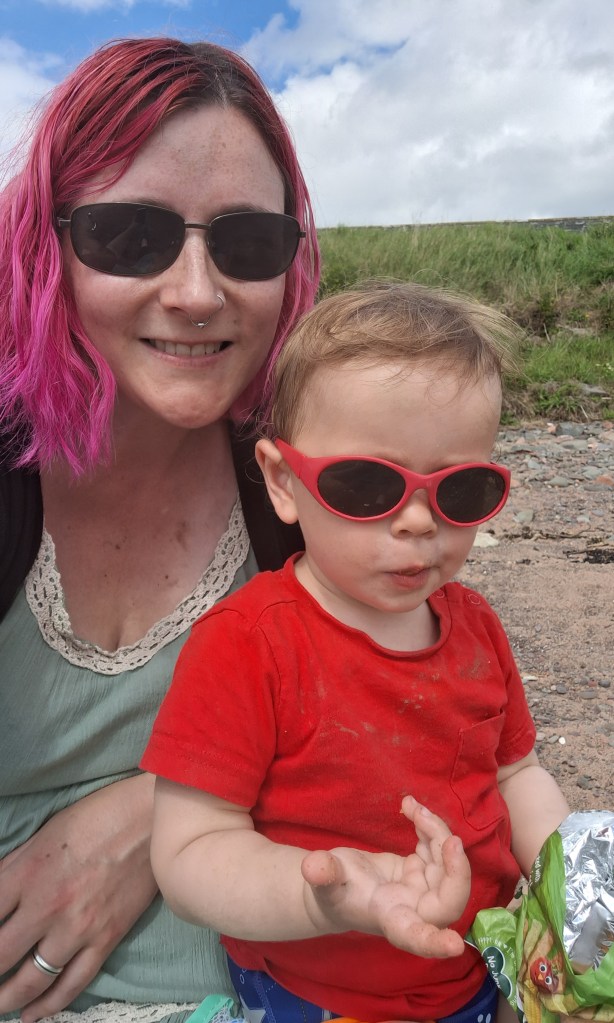
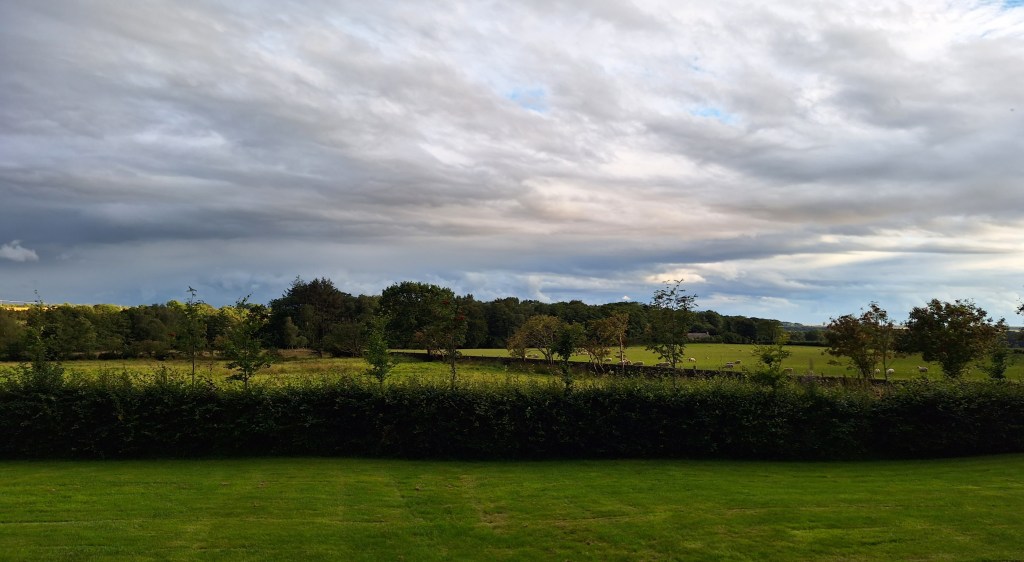
I’ve been taking a bit of a break from writing this week due to being on holiday in a wee cottage near Annan. This holiday included my 1 year old and 4 year old, so largely included play parks and food, but we did get the reward of hot tub time in the evening once the kids had been put to bed, with a lovely view over the fields.

View from our patio

From a writing point of view, I mostly spent my time this month preparing a short story for Globe Soup’s Open Contest, which you could enter if you had paid for their writing course. Admittedly, I probably haven’t read their lessons as thoroughly as I should have, but I think the story that I finished with was fairly decent – hopefully the judges agree! 🙂

Since then, I’ve been editing the latest chapter of George Square and coming up with ideas for my next Storytelling blog. I even managed to find some time to submit a few stories to online magazines – hopefully at least one will be accepted!

In good news for this month, one of my stories was a finalist in the 10th Globe Soup 7 day story writing challenge. The winning story, by Morgan McIntyre, was really good and definitely worth a read.

My story for this contest had to be historical fiction, which is not my favourite. Largely because my historical knowledge is rubbish – while I used to be good at remembering dates and names for exams in school, my brain refuses to store such details as part of my ongoing general knowledge. Thankfully, historical fiction can also include fantasy elements, so this story was basically a story about a kelpie that happened to be set during the Highland Clearances. As always, my next step is to spend months on end trying to find someone who wants to publish it, so wish me luck! 🙈

In less good but still positive news, I submitted a sci-fi story to F&SF (The Magazine of Fantasy and Science Fiction), who are a pretty big magazine if you’re into sci-fi and fantasy. They rejected my story but with a very positive email, saying that they didn’t think I would have trouble finding a home for it. A sign of further improvement in my work! Now I need to submit to other places until I find one that says yes 🙂

Feel free to check out my other published work or have a look at my Storytelling blog, about the psychology within storytelling.

The Rule of Three (and how to use it in writing)

What is the rule of three?

Have you ever noticed how many things come in threes? You can find several examples in children’s stories, like Goldilocks and the Three Bears or The Three Little Pigs. Or you could look to adult fiction to find the three ghosts that haunt Ebenezer Scrooge, the three witches in Macbeth or Beetlejuice being summoned by three repetitions of his name.

The rule of three even pervades our understanding of science and religion, such as Newton’s three rules of motion and Christianity’s holy trinity.

When we think of well known phrases, many can be reduced to three words: “Ready, aim, fire.” “Lights, Camera, Action.” “Live, laugh, love.”

The idea behind the rule of three is that groupings of this number are more memorable, more emotionally resonant and more persuasive than just one or two, or even four or five.

But why?

Why do memorable things come in threes?

There is a potential reason why our stories are littered with threes, though the theory hasn’t been definitively proven. The best explanation seems to be that our brains look for patterns in everything.

Even the simplest of visual scenes cause us to imbue meaning where there is none. In the 1940s, Heider and Simmel presented research participants with a simple video of basic shapes moving across the screen and found that participants were quick to attribute emotions, motivations and purpose to these two dimensional triangles and lines.

But even with a brain desperate to find meaning in the world, we need something first to apply it to. Three is the smallest number of iterations that can form a cohesive pattern. Take this visual example:

Example of two images: a square followed by a circle
Two Item Pattern

With just two images, you can’t be sure yet what the pattern is and may question if there even is one. There could be a different shape coming next, the circle could be repeated, they might not be related to each other at all. You could guess but you wouldn’t feel sure. Now look at this one:

Example of a three image pattern going square, circle, square
Three Item Pattern

Do you feel more confident that the next image will be a circle? Do you feel like you’re looking at a pattern rather than just two unconnected shapes? Seeing the three together tends to lead to a feeling of cohesiveness, where our brains start to assume that they are part of a whole.

The same logic works with the formation of a pattern using words or narrative – by the time of the third example, you’re able to draw conclusions about the writer’s intention. But it also becomes a complete arc, something with a beginning, middle and end, something we are very familiar with in storytelling.

Everyone can remember three things

Another advantage to the rule of three is that the repetition helps us to remember the message or story. The cue given by the pattern acts as a memory aid, causing the story to stick in your mind.

In folklore, making stories memorable was particularly important because they were often passed on from person to person, rather than being written down. Even now, filmmakers and authors want us to remember what we have seen so that we can recommend it to our friends and family.

This is likely another reason that our brains like to work in threes. Research shows that an adult has the working memory capacity to hold seven items in mind, plus or minus two. But a child averages around three or four.

Additionally, looking back at the Heidel and Simmer research, a subsequent study by Wick et al. (2020) has shown that even adults, when presented with multiple shapes, struggle to agree on and follow narratives for images with more than four shapes, and performance was best when there were three.

They question why this was such a small number, when you consider that many stories have more than three characters, or three story events, but this is likely to be because of our brain’s ability to ‘chunk’ information into larger parts in real life. We have to work hard to find meaning in random triangles, but life experiences often have connections that we can draw on to help our memory. So we may still only be able to recall three things, but those three things can be much larger if we can group smaller parts into a bigger whole.

For example, if my working memory is capacity is only for four numbers, and I want to learn 12 digits, I could remember them as “1231 – 4367 – 3476″ but I would probably struggle as the number of digits increased, because the different numbers would risk getting confused in my mind. 

Or if I was trying to remember a story I was told, I could remember it by breaking it down into sections, for example, a house of straw blown down by the wolf, a house of sticks blown down the by wolf, then a house of bricks that stayed standing.

When you think that common folklore is often a warning, a message about how to behave or what to protect yourself from, you want everyone to remember the story, so you need it to be as simple as possible, while still containing the information that’s important. So stories were written with a level of repetition to help keep them memorable, but they were also kept short enough to ensure that as little information as possible was lost when they were re-told later by whoever had heard it.

Using the rule of three in writing

There are a few ways that writers can take advantage of the rule of three to make their work more memorable and emotionally resonant.

The three act structure:

The standard form of this is the beginning, middle and end. The set up, the identification of the problem, then the resolution. This doesn’t mean that you need to follow chronological order – plenty of stories build anticipation by showing the end first, then revealing how the characters got there. Your story doesn’t even need to include these elements in the events around the character – in a character driven story, these three elements might all be about how the character resolves an internal conflict.

Repetition in the narrative:

You will have read stories that use this technique – the Goldilocks narrative where something is too hot, too cold, then just right; or the granting of three wishes from a Genie. These narratives allow for elements to be repeated three times within the narrative itself, meaning that the detail within the story is better remembered.

The tricolon:

You can introduce this at the sentence level to make your conveyed message more memorable. These are a set of three parallel words or phrases, similar in length or structure. The use of this technique allows you to build rhythm within the sentence, as well as building emphasis in the content.

When using a tricolon, try to consider that certain patterns often work better than others. Repetition of the same, or very similar, words can work well to place emphasis on your point, such as “The truth, the whole truth, and nothing but the truth” or “See no evil, hear no evil, speak no evil”. But there are other well known examples that establish a different pattern whereby the first two words or clauses are similar – this can be in terms of rhythm, length, syntax, sound – and you then end on something different and usually longer, which emphasises the last section by causing it to stand out from the others. Take for example, “Life, Liberty and the Pursuit of Happiness” or Edgar Allan Poe’s line “While I nodded, nearly napping, suddenly there came a tapping.”

The rule of three is everywhere

The rule of three is such a pervasive form of rhetoric within writing that you will likely see me reference concepts that use it in future articles. But even before then, I’m sure you’ll find many more examples of it in books, television or public speaking.

If you are a writer, look through your work and see if you can spot any examples of it. Or if you enjoy reading, flick through your nearest book and see what you can find.

If you enjoyed reading this, feel free to like, comment and share 😉

*

If you’re interested in reading my previous Storytelling posts, you can find them here

Or why not check out my serialised young adult fantasy novel George Square or my published short fiction.

*

Meet the author

Author photograph

Caroline Ashley is a clinical psychologist who works for the NHS in Scotland. She is a lover of fantasy in all forms and fascinated by the ways in which the fantasical can speak to our everyday lives.



Happy summer!

(AKA my blog post is late because I was on holiday)

Due to having two young children, we decided to stick to the UK for our holiday this year, to save ourselves the joy of navigating an airport and a flight with our delightful, independently-minded monsters. So we spent a week in Dumfries and Galloway instead.

Looking at the weather forecast, we thought we were going to end up with it raining all week, but the weather gods were clearly in a good mood and granted us some lovely days (interspersed with rain of course, it is the West Coast of Scotland after all).

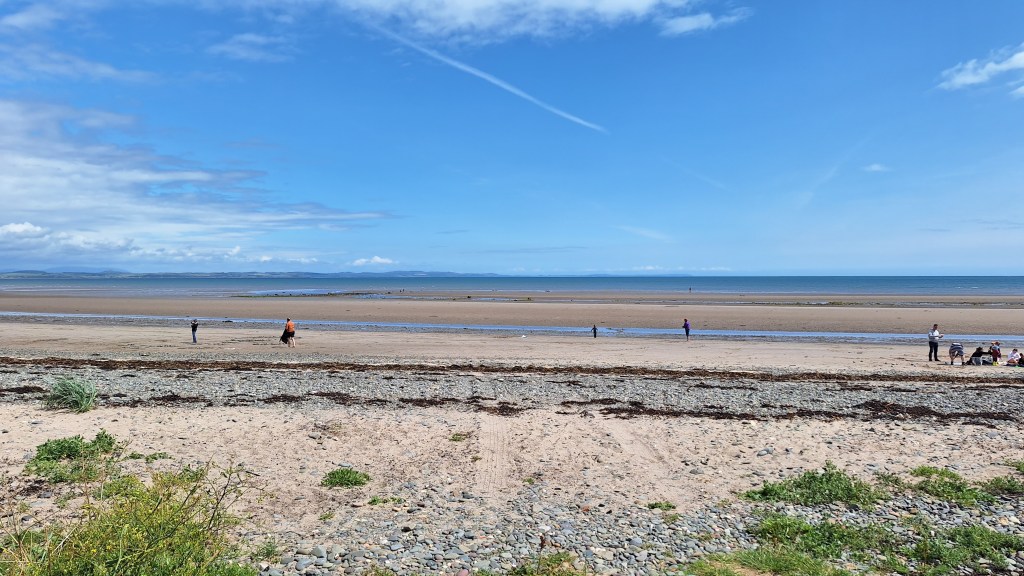
Sandhead Beach

I often went on holiday with my family to Dumfries and Galloway as a child, so it was a bit of a walk down memory lane too. I hadn’t visited this neck of the woods in years so it was interesting to see what had changed and what had stayed the same.

I wrote quite a lot when I was little and often went on holiday with a notepad and pencil, drafting stories while my dad fished off a pier or a beach. The idea for the world of George Square is one that I’ve been playing around with since the time of our holidays down there.

I would sit in the car, watching rows of evergreen trees fly past and imagine a castle hidden from view, where my characters all lived. I would scramble over jagged rocks, listening to the roar of the sea, and imagine some of their adventures to dangerous places, far from home.

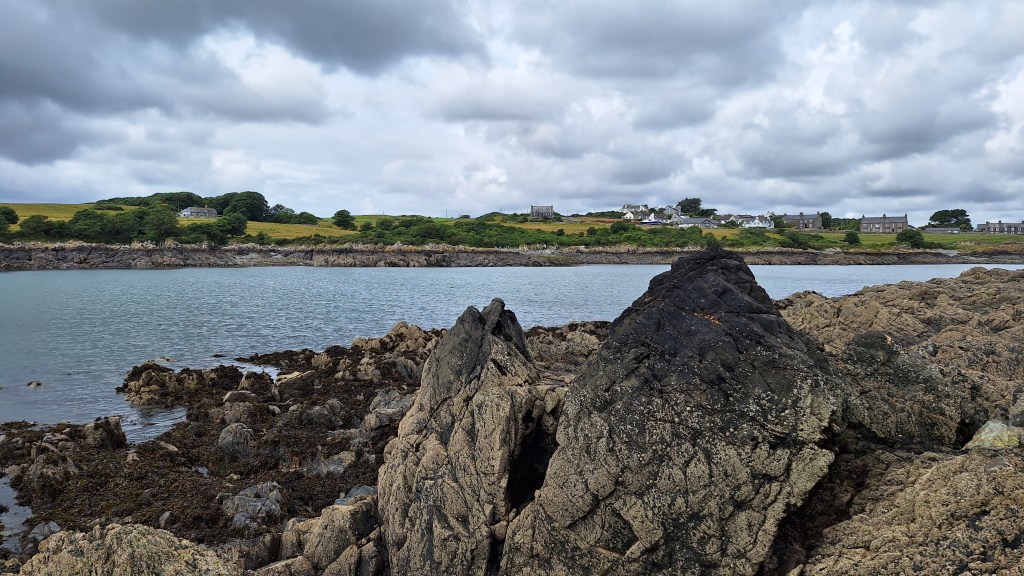
Isle of Whithorn

But on this holiday, I mostly spent my time entertaining a 1 year old and a 4 year old, so not much actual writing was achieved. Once they were in bed, my husband and I spent our evenings relaxing in a hot tub with a glass of wine and revelling in the beauty of the countryside.

Normal activity should resume for now, though we’re taking another week away next month so we’ll see when I get the next post out!

Or why not check out my other published work while you’re visiting 😊

*

National Flash Fiction Day 2023

Just a wee update to let you know about a story of mine that’s been published as part of the Flash Flood for National Flash Fiction Day 2023.

I wrote ‘The Unicorn in the Garden‘ last year for a contest – I’m so glad that it’s now found a home somewhere for people to read it 😀

Feel free to check out my other published short fiction. I’m starting to build a bit of a portfolio which is a lovely confidence boost!