Why we love morally grey characters: A psychological breakdown

Most of us will have found ourselves rooting for characters who have done terrible things. Walter White. Villanelle. Loki. Kaz Brekker. Jude Duarte.  These characters lie, manipulate, even kill — yet we follow them, fascinated, hoping that, somehow, things might work out for them in the end.

Morally grey characters have become increasingly popular in modern media, reflecting a trend towards exploring the complexity of human nature. They straddle the line between right and wrong, breaking rules, working towards their own ends rather than the good of society.  

Challenging our own moral code

The psychologist Lawrence Kohlberg theorised that moral reasoning is a skill that people develop over time, largely associated with growing up, although adults may respond to moral choices based on earlier stages of reasoning too. At the lowest level of moral reasoning, our priorities are our own self interest and avoiding punishment from others. Then we move into making choices based on external rules, relying on social norms and societal laws to define what is moral. And then we move into the higher level of reasoning, where we develop our own internal principles. At this level, laws and social norms are not seen as absolute, and we may challenge those rules if they conflict with our own principles.

The morally grey character triggers us to question the moral principles that we live by. If they commit an act that goes against our moral norms, but we can understand why that character has made the decision they have, it then makes us wonder if we would make the same decision in their circumstances. These challenges to our internal moral code are an important part of growing and developing as adults, and doing this through the medium of fictional characters allows for a safe space to mentally experiment with our internal rules, free of real world consequences, much as children will roleplay with their friends.

And often these stories of extremes are fascinating to us. If you don’t belong in society, if you are rejected and unloved, then what is left but to look out for yourself, to give up on complex moral questions and enjoy what you can of the life that you have? Acting without restraint, prioritising our own needs – we stop ourselves from doing this in order to avoid rejection or punishment. We are all part of family or friend units, we are part of the society in which we live, and as a result we make compromises for others in order to continue to fit in with that society. But there is a part of us that can feel excited by the idea of being free to do as we please without consequence, or being strong-willed enough to challenge the parts of society that we disagree with. Morally grey characters don’t compromise. They live the lives that they want to live, damn the consequences, and we will them to succeed, because a part of us wishes we could do the same.

The pleasure of cognitive dissonance

Empathy comes from a neurological process, designed to aid our survival. Our brains are constantly working to understand the intentions of others, and part of that understanding comes from neurologically mirroring their emotional states in ourselves. So when we witness or imagine another person feeling scared, or angry, or hurt, a representation of that state is activated in our own brain, to the point where we can almost feel it in our own bodies. This is also linked with theory of mind – the process by which we try to see the world from the perspective of those around us, in order to aid our understanding both of their actions and of the context around us. Thus, when we read or watch stories about fictional characters, our brains work hard both to try and see what they see and to feel what they feel.

In the case of villains or morally grey characters, this can lead to a feeling of cognitive dissonance, where we can empathise with them and even like them as people, but at the same time we dislike or judge the actions they have engaged in.

Cognitive dissonance can be an uncomfortable feeling, and so our brains seek to resolve it so that we feel better.

We might distance ourselves from our own moral judgement for the sake of the story. We might focus on the mitigating circumstances that could lead a character to act that way. We might compartmentalise, trying to block out the actions that we dislike in order to embrace those that we do. Or we may in fact re-evaluate our definition of good and evil due to our understanding of that character’s choices. But whatever we do – our brains are stimulated by the dilemma. We enjoy being invited to think and feel as we engage with a narrative, and it keeps us paying attention far longer than if the character did not challenge us in this way.The moral complexity of the modern world

Morally grey characters have existed throughout the ages, however, they have increased in popularity in the modern era.

As we have moved into a more secular world, we are less guided by a uniform moral code, dictated to us by those in authority. While governments may prescribe laws to live by, it was previously the realm of religion to speak to morality and ethics. Without religion, society shifts to a more relativistic view of morality, where right and wrong is not always as clear cut as it used to seem, and where we have to look to a range of different sources in order to develop our own internal code.

But also, we now live in a more complex, interconnected world, with access to a wealth of information about other cultures, religions and people. We hear scandals about people in power and are exposed to the grey areas of our societies in ways that we never were before.

So, characters who operate outside of, or conflict with, established and/or corrupt systems resonate with an audience that sees the shades of grey in the world they are living in, where no one is purely good or evil, and the right thing may be dependent on your point of view.

What This Fascination Reveals About Us

At its core, our love for morally grey characters isn’t about rebellion from the social contract, but about recognition. Through them, we see our capacity for contradiction, our potential for harm, and our longing to make sense of a complex world.

They give voice to the parts of us that crave freedom, power, or control — and then make us question what those desires mean.

We learn not just about the characters, but about our own moral elasticity, because deep down, we know: if we’d lived their lives, made their choices, carried their wounds — we might not be that different.

 About the author
Caroline Ashley is a clinical psychologist who works for the NHS in Scotland. She is also an aspiring fantasy writer and this blog is a way for her to integrate her love of fiction with her knowledge of psychology. Her published short stories are available on her website, or follow the links below to read more of her blog posts.

Navigation

The Hero’s Journey — and Why It Still Matters Today

Ever since humans began to tell stories, they spoke about heroes. They told tales of epic quests of discovery, where warriors slayed monsters and outsmarted the gods, forever changing their lives. The two earliest examples of a story about the hero’s journey date back to ancient Mesopotamia, more than four thousand years ago, but similar stories can be found across the world. So why are heroes so important to us?

What the Hero’s Journey Really Represents

The writer Joseph Campbell famously proposed a template to the hero’s journey, a narrative pattern that these stories tend to follow. He broke the template down into three parts:

  • Departure – this is where the hero is called to adventure. They may embrace this call, or they may initially refuse it due to doubt or fear. Once their journey begins, they may receive aid from a mentor, and then they must leave their known world behind and venture into the unknown.
  • Initiation – the adventure itself, where the hero faces setbacks, temptations and challenges but ultimately finds the strength or skill to achieve their goal.
  • Return – in order to truly succeed, the hero must also manage to return to their old world, to share their achievements with others. This may involve needing to escape from the place they have journeyed to and can be as difficult as the initial adventure. Ultimately, the hero returns transformed by the journey.

These stages very easily mirror any change that we must go through in our lives. When we grow up, we leave the family home, learning to live life without our parents beside us, and we continue to make choices as adults that lead us into the unknown of, for example, a new home, new job, marriage, or children. Each choice will come with setbacks and obstacles, with the hope of a reward at the end of it all, and the experiences change us, shifting our perspective on the world.

The hero’s journey is ultimately about slaying the dragons inside of us – the fears and doubts and insecurities that might hold us back from becoming who we need or want to be. It’s the story of every human who’s ever outgrown a version of themselves and needed to become someone different. In a timeless, universal and profoundly human process, we all must come to terms with the limits of our own strength and skill – accept what we cannot change, and find the courage to change what we can.

But, much as in life, the narrative of the hero’s journey is often more nuanced than stories about people who defeat their enemies and live happily ever after. Not all heroes who set out on their journey will succeed – sometimes fate simply works against them and sometimes the cost of winning is their own life or wellbeing. Oedipus attempts to avoid his prophesied fate and in the process he ultimately causes it to come to pass. Prometheus brings fire to humanity and is severely punished by Zeus for his actions. Katniss Everdeen helps bring about the downfall of a dystopian society, but is so traumatised that she struggles to enjoy the new world she’s helped to create. Frodo destroys the One Ring and saves Middle Earth, but never fully recovers from the emotional and physical wounds caused by his quest.

The purpose of these stories is about the heroes finding meaning and purpose in their lives, rather than happiness or reward. They tell us that sometimes risks are worth taking for the sake of those around us and that even if we fail, we may have achieved something worthwhile along the way.

Why the Hero’s Journey Feels So Relevant Today

These days, the scripts for our lives are less clear than they used to be. In earlier generations, many people followed predictable life paths, where the expectations were passed to them from their parents and their society, influenced by their gender, their social class, their family circumstances. These days, although these factors will still have an influence, our path contains far more options than it used to and finding our own sense of purpose and meaning in life is a major aspect of the modern world.

The latest statistics suggest that more than 20% of the population in the Western world has experienced mental health difficulties, a rate that has steadily increased over time and is becoming more prevalent with young people, in particular. This has been influenced by the impact of the Covid-19 pandemic, the challenges of social media and modern technology, and also by increasing socio-economic pressures, that mean that younger people feel less certain in their future than their parents or grandparents might have done.

The hero’s journey offers a template for making meaning from the difficulties that we feel. We have all found ourselves at some point forced to choose between staying the same, sticking with what we know, and making a change that may or may not work out for the best. We have all found ourselves stuck in moments of self doubt or insecurity, feeling trapped by our circumstances or by our own fears, or faced with a loss that we don’t know how to move on from. Heroes are the people who take risks, who escape from the traps they find themselves in, who face danger and uncertainty with the hope of reward at the end. Sometimes they fail, but they always manage to find the courage to try.

We fall in love with stories like K Pop Demon Hunters, The Lord of The Rings, The Hunger Games or Harry Potter because they tell us that there is meaning to the struggles we face. By finding courage in the midst of hardship, these heroes save the world and become better people, finding a sense of purpose through their journey, even if they don’t get to live happily ever after by the end.

When we read or watch stories about these heroes, we feel inspired by them and we aspire to be more like them in our own lives. Their narratives help us to feel more able to face our own challenges, more confident that it can be worth taking risks.

Integrating the Hero’s Journey into new stories

Just because stories about heroes have been told before, doesn’t mean that there isn’t room for new interpretations of the template, giving a new sense of meaning to the narrative.

The important part in using this template in stories, is to be aware of the true purpose of the narrative, rather than seeing it as a check-list of plot points. The journey is never just about the events that happen around the heroes – it’s about how those events change them as people and allow them to grow and learn from their experiences.

If the journey is so easy that the hero never struggles or questions their goals, then what is the point of the adventure? But also, if they do struggle and they suffer along the way, then there must be meaning in that suffering, something that allows them to move forward in their lives in a way that they wouldn’t have been able to before. In the Epic of Gilgamesh, Gilgamesh loses his best friend after they anger the gods and his fear of death leads him to search for immortality, starting him on a new journey. Heracles kills his family after being driven mad by the goddess Hera, leading him on a quest to atone for his actions. In more modern stories, Katniss Everdeen would never have become a figurehead for a rebellion if she hadn’t had to live through the Hunger Games first. The suffering or loss become a part of the hero’s identity, shaping their future actions.

It’s also important to consider the ‘return’ stage of the journey. Often the victory feels like it’s the end goal, but what does that victory mean for the hero and their world? In Lord of the Rings, Frodo achieved his goal but was so fundamentally changed by his journey that he chose to leave Middle Earth with the elves, unable to return to the way of life he had grown up with. In Ender’s Game, Ender’s unintentional destruction of humanity’s enemies leads him to search for atonement, ultimately starting a new quest to restore those enemies. In Moana, saving Te Fiti allows her people to explore the seas in ways that hadn’t been known for generations.

When done well, the hero’s journey can become a mirror for readers’ own development, with characters that they feel they can relate to. It reminds them that growth and change can hurt, that grief and loss are always painful, that we all make mistakes, but that there is also hope that we can recover from these challenges and find either meaning or happiness along the way.


About the Author

Caroline Ashley is a clinical psychologist who works for the NHS in Scotland. She is also an aspiring fantasy writer and this blog is a way for her to integrate her love of fiction with her knowledge of psychology. Her published short stories are available on her website, or follow the links below to read more of her blog posts.

Navigation

Why do we become attached to fictional characters?

The role of empathy in connecting with characters

I’ve previously written about the role of theory of mind in storytelling. This is our ability to put ourselves in someone else’s shoes, to understand their perspective even when it’s different from our own, and use that understanding to explain and predict their behaviour. Using theory of mind allows us to gain new insight into how other people, or society at large, think and feel.

Another related concept, which also influences our social and emotional connection with a story, is empathy. When we empathise with someone, we recognize and understand their emotions, we feel what they feel, and that ability is used when we read stories as well.

There have been various research studies showing that stories with emotional content, or a need to infer a character’s emotions or intent, leads to the activation of similar brain areas as experienced emotion (AbdulSabar et al, 2014; Berthoz et al, 2002; Ferstl et al, 2014; Gallagher et al, 2000). When we read, watch or listen to a story, this can trigger genuine feelings in us as we read it, which will then strengthen our engagement with the narrative.

A low risk relationship

The result of this emotional response to stories is that we can start to feel a connection to the characters within a narrative. This connection can build into what psychologists call a parasocial relationship. This term was originally coined to describe relationships where one person extends emotional energy and interest in a persona, such as a celebrity or media influencer, who isn’t aware of their existence, but it has been extended over time to include a figure who doesn’t exist, like a book or movie character. Our brains are so inclined to build these social connections that we become invested in the future of someone who can never actually reciprocate.

In some ways though, that lack of reciprocity makes it easier to invest in a connection. When we show that we care for a real person, we expect something in return – whether that be rejection or acceptance. When we enter into a friendship or a relationship, there are regular tests of that connection and a need to work to maintain it. Sometimes friendships drift apart or end badly;  we can feel like the effort wasn’t worth it or we can be broken-hearted by the loss.

But when we feel attached to fictional character, none of that matters. There are no real life expectations to meet and we can root for their success with no impact on our day to day lives. If they’re a character in a romance, we can imagine living in their world, without having to move on to the reality of a relationship, where managing the bills and the household chores take precedence over the giddy rush of falling in love. If they’re a character in an adventure story, we can imagine taking risks and facing danger, without ever leaving the safety of our home. The characters will never reject us or judge us and we’re always able to go back to the narrative that we fell in love with. They are safe and predictable in the emotions that they make us feel.

Why do we like certain characters more than others?

Our favourite characters are as unique to us as our own personalities, though the most popular characters often have traits that appeal to a wide range of people. Often the characters we like resonate with something about ourselves or our lives. They might have traits that we value and want to emulate, like the superheroes of the MCU; they might behave or think in the ways we look for in a partner, as with many of the love interests in romance stories. Or, they might be villains that we feel empathy for because we understand their point of view or sympathise with the circumstances that led them to their behaviour, such as with Frankenstein’s monster.

When I first read Terry Pratchett’s Discworld series, I fell a bit in love with Sam Vimes. He was a middle aged guard in the city of Ankh-Morpork, who had become disillusioned by his corrupt home and turned to alcohol to manage his feelings. Over the course of the books, he was inspired to turn things around and work to build a real police force, but he never lost his gruff edge. There was something about the way he wanted to do good and succeeded in his own way that just really appealed to me. No heroics or super powers, just a determination to catch the bad guys and do it by the book.

Another character I’ve always loved is Edward Elric from the Full Metal Alchemist manga series. He and his brother lost their mother and tried to bring her back to life. They failed and instead Ed lost his arm and leg, while his brother lost his whole body. Ed was determined to restore his brother, always looking out for him and never as concerned for his own loss, but he also had a strong moral code and was horrified in their journey at the damage others were willing to do for their own self interest. While his brother was always his priority, Ed was also willing to put himself at risk to help others – ultimately making a big sacrifice in order to save the world and his brother.

I also don’t feel like I can talk about famous characters without bringing up the Harry Potter series, but for the topic at hand, I would argue that Severus Snape is the most memorable character of these books. Some would say that he was poorly written: a cowardly bully who we were supposed to forgive because he helped Harry in the end. Others see him as a misunderstood hero, who sacrificed his reputation for the sake of the greater good. The different view points are what keeps him in our minds – the scenes with him standing out over others as we analyse his behaviour for signs of his underlying intent. This engagement with trying to understand his point of view is what builds our connection with him, even if our conclusion is that we dislike him!

How to create a character that readers connect with

There’s no perfect mix of traits that will make a reader feel attached to a character, just like there is no person who can be friends with everyone. Aspects that appeal to one reader may put another off entirely. But there is one thing that’s likely to help: keeping the reader guessing.

The biggest thing that engages a reader is needing to pay attention to details within the narrative. The more the character makes us think, the more we try to make use of theory of mind and empathy. This can be done either through individual scenes or through the narrative itself.

Most writers are aware of the guidance to ‘show, not tell’ and there’s a good reason for this. Being told that character is scared doesn’t tend to elicit emotion on its own, because it doesn’t give us the contextual clues that we use to make sense of emotions, and it doesn’t make us actively engage with what’s happening.

Take this quote from The Big Sleep by Raymond Chandler:

She slammed her glass down so hard that it slopped over on an ivory cushion. She swung her legs to the floor and stood up with her eyes sparking fire and her nostrils wide.

We as readers are forced to picture and interpret the character’s behaviour, activating similar brain areas as if she was in the room with us. This means that we’re more likely to ‘feel’ her anger as we read the book, even though the word anger isn’t used in the text.

The Big Sleep is a crime novel, so the narrative has characters double-crossing each other and revealing secrets, keeping the reader guessing along the way. But mystery within the narrative doesn’t have to be as integral to the story as that. It could be that the character doesn’t show their feelings right away, or they hint at a backstory that’s later revealed in detail. It could be that they go through a journey, developing their confidence or power or changing their perspective on the world, and the reader becomes compelled to see how their journey ends.

The most memorable characters make us work to understand them or connect with them. Their words or actions trigger those brain areas involved in theory of mind or empathy as we try to explain and predict their behaviour. If a character is part of a story arc that arouses our curiosity and they’re written in a way that ‘shows’ us their feelings, then readers are far more likely to connect with them, meaning that they’ll be remembered even after the story is over.

 About The Author

Caroline Ashley Author with red hair

Caroline Ashley is a clinical psychologist who works for the NHS in Scotland. She writes monthly articles on her website about the different aspects of psychology that relate to telling stories. She is also a fantasy writer and is currently working on completing her first novel. If Caroline had any spare time around work, writing and raising her two young children, she would spend it playing board games.

Navigation


Lost in the world of novel writing

I realised that it’s been a while since I posted on my personal blog. Things have been relatively quiet here. I haven’t entered many contests and there’s not been any new publications to update about. However, I did get the good news last week that I had received an honourable mention in the L Ron Hubbard Writers of the Future contest for the second quarter of 2024. This is a well-known international contest, so being recognised for my work is a big confidence boost!

Otherwise, I have mostly been working away at completing my novel.

Tentatively titled “Battle Scars”, it’s the story of a woman named Rebecca Mason. She nearly died five years ago when a man named Rafe McKendrick brutally attacked her. His twin brother, Erik, saved her by turning her into a werewolf and Rafe was exiled from his pack. Rebecca struggles every day to reconcile her human life with the supernatural world. And then one day, Rafe comes back, and he’s threatening not just her but her new found pack and all of werewolf society. Does she have the strength to stand against the man who nearly killed her?

The novel is now written and one of my lovely fellow writers is reading it to give me feedback. There’s bound to still be plenty of editing to do but having a finished novel feels almost within reach!

On top of that, I’m also working on the sequel, which has a different point of view character. A gamble maybe, because I know people like having a single protagonist to follow, but it feels the right thing for the series I want to tell, so hopefully it works once it’s written! My aim for this book in terms of writing skills is to improve my efficiency, getting it written within a faster timescale by doing more planning at the beginning instead of just pantsing my way through it 🙈 If I can write faster, I’ll be able to get more books written in the long run so it’s definitely worth making myself more organised!

Look out for another Storytelling blog post, which I will try to get completed this week if I can pull my focus away from the novel writing 😊

Navigation

Let Me Tell You My Story: The First Person Narrative

For the last few posts I’ve been discussing the importance of the point of view that a story uses and how narrarive perspectives can impact the story. We’re now onto the last perspective that can be used in story telling, which is first person.

What is a First Person Narrative?

First person perspective is when the story is written with the narrator as the protagonist who has experienced or is experiencing the events of the narrative. It is an intimate perspective, designed to elicit the experience of the reader being told a first person account of a story, with access to the narrator’s thoughts and feelings throughout.

One mistake at the end of my life couldn’t erase all the times I had stood unmoved at the edge of the abyss and made snide remarks at its expense. They could kill me, but they couldn’t have me. I was my own.

Ghost Story – Jim Butcher

To imagine a book as a real life scenario, in first person narratives you are sitting down next to another person and that person is sharing a piece of their life story, including both the events and their own thoughts and feelings at the time.

Why use a first person perspective

The intimacy of connection

The most obvious advantage of this perspective over others is how closely connected you are with the narrator. This is a far more intimate perspective than even third person limited (which I discuss here) because the narrator has invited you in, they’re actively telling you their story and sharing their experiences. As a reader, you’re not just observing what happens: you’re being asked to share in it.

From a psychological perspective, humans are profoundly social species. Our brains are wired to  connect to others and experiencing that connection has been shown to activate brain areas associated with physical safety and warmth.

A first person narrative is an extreme in human connection. A person who is willing to share every little detail of their experience with you, right down to their personal thoughts and feelings. As a social animal, we’re likely to find this highly rewarding – provided we see something in the story that we’re interested in connecting with.

Detailed Character Development

First person narratives allow for a detailed exploration of the narrator’s character, in a way that no other perspective does.

There are several examples where the first person perspective exposes us to detailed elements of the narrator’s thinking style and personality that we wouldn’t really have access to otherwise.

One would be The Curious Incident of the Dog in the Night-time, which is narrated by an autistic teenager and gives unique insights into his perspective of the world around him.

I like dogs. You always know what a dog is thinking. It has four moods. Happy, sad, cross and concentrating. Also, dogs are faithful and they do not tell lies because they cannot talk.

The Curious Incident of the Dog in the Night-time – Mark Haddon

The premise of the book stems in part from his own unique viewpoint – when he finds a dead dog, he sees it as a murder and sets out to investigate and find the killer.  Even the way in which the narrative is presented offers insight into the character that the reader might not otherwise have access to – such as the way that he describes his thoughts and experiences using diagrams.

Of course, the flip side of such a personal account is that it’s inherently biased and potentially unreliable. As far as our social brains are concerned, that’s part of the fun. We love puzzles and gain satisfaction from solving them. Solving social puzzles has the additional benefit of adding to our understanding of other people – so if we distrust an unreliable narrator, we feel rewarded to be proven right; or if they catch us out, we get the buzz from the shock of the surprise.

One well-known example of an unreliable narrator is Pi Patel from The Life of Pi, who recounts his fantastical story of surviving stranded at sea with a tiger named Richard Parker and then presents an alternative, more realistic but also more brutal, version of events and we as readers need to decide which we would prefer to be true.

I was giving up. I would have given up – if a voice hadn’t made itself heard in my heart. The voice said “I will not die. I refuse it. I will make it through this nightmare. I will beat the odds, as great as they are. I have survived so far, miraculously. Now I will turn miracle into routine.

The Life of Pi – Yann Martel

Only in a first person narrative could a story be called into question to such a degree. Most other perspectives lead to an assumption that the story is being observed in some way by the reader, albeit with a potentially biased filter imposed by the narrator. Whereas in first person, we’re living in someone’s mind – and we all know how inaccurate our own perceptions can sometimes be!

Societal Issues at an Individual Level

Another powerful use of a first person narrative is to use the individual narrator as a  way to speak to a wider societal issue, either as a form of analysis or critique.

A wonderful example of this is Never Let Me Go by Kazuo Ishiguro. This book explores the lives of Kathy and her friends, who are clones created to be organ donors. In her world, they are seen as less than human. Kathy’s role is to care for and reduce the ‘agitation’ of fellow donors. She is never in a position where she can fight against her place in society but her own first person narrative does that for her – it humanises her and her friends, connecting the reader with them in a way that those in her world refuse to.

Or another example would be Fight Club by Chuck Palahniuk. An unnamed narrator, who feels disenfranchised from society and its definitions of manhood, turns to Tyler Durden. Tyler Durden starts a fight club and then a cult-like organisation, which engages in increasingly dangerous anti-consumerist attacks. At first, the narrator seems to be just another follower of Durden, until it emerges that he has dissociative identity disorder and he and Durden are the same person.

The first person perspective gives the reader a unique insight into the mind of the narrator, seeing the world as he convinces himself it is, rather than how it really is. We follow along with him, watching Durden grow increasingly out of control. Even once the narrator knows the truth, events have already moved beyond him, leaving him just as helpless in the face of Durden’s actions as he was in the face of the society that he struggled to fit in to.

What first person perspectives can’t do

By definition, this perspective is the story of one person. Everything that the reader sees has to have been seen by them. While events could be shared with them by other characters, if a lot of action happens away from the narrator then this can leave the reader feeling disconnected from the story.

This means that the narrative in a first person story is often narrower in focus than other perspectives. In third person limited, the camera might pick up on details that the protagonist misses. In third person omniscient the narrator can see anything that they need to for the sake of the story. Even second person can take on a more omniscient form when required.

One solution to this is to include multiple first person perspectives, like in Gone Girl by Gillian Flynn, which relies heavily on both narrators being unreliable and obscuring the reality of the story. This can work well as a way to tell an immersive story from multiple angles, building a wider picture than with a single point of view. However, there is a risk of confusion for the reader in terms of who is speaking and when, which means that in many cases third person is often easier – allowing the narrative to follow the protagonists closely without any confusion around which character is the current focus.

More generally, some people can find a first person perspective to be too immersive and can be put off by the story as a result. They may not connect with the narrator or they may feel frustrated that they aren’t seeing aspects of the other characters’ stories. Therefore it has to be clear why those other aspects are less important to the themes of the story than the mind of the narrator itself, or people may struggle to join the narrator on their journey.


 About The Author

Caroline Ashley storytelling blog author

 Caroline Ashley is a clinical psychologist who works for the NHS in Scotland. She enjoys all forms of fantasy and is fascinated with the ways in which the fantastical can speak to our everyday lives. If Caroline had any spare time around work, writing and raising her two young children, she would spend it playing board games.

Navigation


The Rise and Fall of the Omniscient Narrator

Third person point of view (POV) is the most commonly used in fiction, so we should all be familiar with what it looks like. But if you aren’t a writer, you may not realise that there are two different types of third person narrative:

Third Person Limited:

Third person limited follows a single person, with the narrator functioning like a camera that can see everything around them, often including their thoughts.

The lapping of water in his ears. That was the first thing. The lapping of water, the rustling of trees, the odd click and twitter of a bird.

Logen opened his eyes a crack. Light, blurry bright through leaves. This was death? Then why did it hurt so much?

The Blade Itself – Joe Abercrombie

Third Person Omniscient:

Third Person omniscient is a more complex viewpoint. In this POV, the narrator is a character in their own right, an all-seeing being who can follow the story down whatever path it takes.

There was once a young man who wished to gain his Heart’s Desire.

And while that is, as beginnings go, not entirely novel (for every tale about every young man there ever was or will be could start in a similar manner) there was much about this young man and what happened to him that was unusual, although even he never knew the whole of it.

Stardust – Neil Gaiman

Third person omniscient used to be a far more popular POV than it has been in recent years. Many well-known books have had omniscient narrators, such as Little Women by Louisa May Alcott or Lord of the Flies by William Golding or Dune by Frank Herbert. But increasingly, modern books tend to prefer third person limited, or even first person, over third person omniscient.

This varies somewhat depending on the genre of course. Sprawling epic fantasy and sci-fi novels tend to benefit from an omniscient narrator, who can draw the reader’s attention across the country or across space to different events that are relevant to the story. However, more contemporary fiction often tends toward the intimacy of third person limited, where you see the story unfold through one character’s perspective.

What is the impact of third person omniscient?

The authoritative voice of the narrator

A good omniscient story has a strong narrative voice. It essentially reads like someone is telling you as a reader a story, where they know the events and the outcome already. The elements that are in the story have all been curated, pulled together by the narrator to communicate their chosen narrative.

Older authors such as Jane Austen used this voice to bring a level of intimacy between the author and the reader, as if the author herself is telling the reader the story. Others use the narrator as an additional character with their own agenda, such as in Marcus Zusak’s The Book Thief, where the narrator is Death himself observing and commenting on humanity.

Done well, this form of narration harks back to the days of oral storytelling. Sitting by the fire with the storyteller sharing a fable with their audience – they have a purpose in telling the story and their opinion about the narration is as integral as the story itself.

Exploring a wider context

An omniscient narrator can introduce information about the wider philosophical, historical or social context to a story without needing to rely on the characters being aware of this context. This allows for a more detailed analysis of world in which the story exists.

The twin city of proud Ankh and pestilent Morpork, of which all the other cities of time and space are, as it were, mere reflections, has stood many assaults in its long and crowded history and has always risen to flourish again. So the fire and its subsequent flood, which destroyed everything left that was not flammable and added a particularly noisome flux to the survivors’ problems, did not mark its end.

The Colour of Magic – Terry Pratchett

Stories where the setting is as important to the themes as the characters themselves often benefit from the freedom to explore beyond a character’s limited perspective. Authors such as George R.R. Martin get round this by having multiple limited POVs but even that approach still relies on characters being aware of or exposed to the aspects of the setting or history that are important for the story as a whole.

Multiple character perspectives

Omniscient narratives allow for a detailed view of multiple characters. If the story is about their relationships or their responses to an event, then this POV allows the writer to equally focus on each perspective, rather than needing to prioritise one over the other.

Jessica stopped three paces from the chair, dropped a small curtsy, a gentle flick of left hand along the line of her skirt. Paul gave the short bow his dancing master had taught—the one used “when in doubt of another’s station.”
The nuances of Paul’s greeting were not lost on the Reverend Mother. She said: “He’s a cautious one, Jessica.”
Jessica’s hand went to Paul’s shoulder, tightened there. For a heartbeat, fear pulsed through her palm. Then she had herself under control. “Thus he has been taught, Your Reverence.”
What does she fear? Paul wondered.

Dune – Frank Herbert

In the above quote, the narrator gives glimpses into the perspectives of all three characters, and reveals information about the dynamics between Jessica and the Reverend Mother in particular.

Dramatic irony

Because the narrator is outside of the action in third person omniscient, they can make the reader privy to information that the characters aren’t. This allows the narrator to build suspense by leaving the reader to anticipate a later revelation or consequence.

She was the book thief without the words.
Trust me, though, the words were on their way, and when they arrived, Liesel would hold them in her hands like the clouds, and she would wring them out like rain.

The Book Thief – Marcus Zusak

This concept lends itself well to the kind of story where the reader already has an idea of how the story might end where the narrative is more about the journey that gets them there.

So why do writers use omniscient narratives less now?

Within writing circles, the most common view is that omniscient POV is less popular now because it’s so much more difficult to get right. People talk about how too much perspective shifting leads to readers feeling like they’re head hopping and losing sight of which character they should be following. Or they talk about how it leads to the reader feeling distant and disconnected from the narrative. But writing omniscient narratives is no more difficult than it was before, so what’s changed?

In my opinion, the change in popularity represents a shift in reader expectations. Omniscient narratives are often more about society and culture than they are about the characters within them, which is partly why they work so well with epic fantasy, where the reader is immersed in a brand new world with its own society to discover.

Or, if the characters are the true subject of an omniscient narrative, the story is told in a way that keeps a level of distance – as if the author is a friend telling you a story about someone they know. You might learn personal details about the characters, but it’s all told though the filter of the narrator.

These days, we often don’t want that distance. With the rise in the Internet and social media, we’re used to feeling connected to the people around us, to having glimpses into the personal lives of people that we don’t even really know. And so when we read a story, we look to feel that same connection with the characters we read about, which third person limited (and first person) allows us to do.

Omniscient narratives can also give an air of the narrator being an authority within the story, someone teaching the reader something they wouldn’t otherwise know. As our society has shifted, with less emphasis on social hierarchy, I think readers are more inclined to want to feel like an equal within the narrative, someone who is discovering it for the first time with the characters, rather than being taught it later by the narrator. We want to feel the thrill of the vicarious experience without the filter of knowing that the story has already happened.

Does that mean omniscient narratives are dying out?

Even if society had changed and what most readers want is different now than in the past, that doesn’t mean that there isn’t a place for the omniscient POV. Plenty of authors still use it to powerful effect and are successful in building an audience to read their work. These days though the reason for its use needs to be carefully considered – a choice by the writer to achieve a particular narrative effect that fits their story.

About the Author:

Caroline Ashley fantasy writer

Caroline Ashley is a clinical psychologist who works for the NHS in Scotland. She enjoys all forms of fantasy and is fascinated with the ways in which the fantastical can speak to our everyday lives. If Caroline had any spare time around work, writing and raising her two young children, she would spend it playing board games.

Navigation:


‘They Do Not Know The Earth’ and other things

If you follow me on social media, you’ll have already seen that the Hooghly Review have published one of my stories in their 3rd issue, which was released today. ‘They Do Not Know The Earth‘ is a flash fiction piece about a witch grieving for her lost family and trying to use magic to fill the hole they’ve left.

I’m aware I’ve been pretty quiet of late and I’m planning to attempt to get back on track this month. My writing has still been a priority but I was taking part in a free five day challenge with Writer’s Ink, as well as attending workshops organised as part of ProWritingAid’s Fantasy  Writers Week. Both have provided some useful insights into writing longer fiction as well as the publishing and marketing side of the journey, which I’ll hopefully be able to use to my advantage with time!

It can be a bit overwhelming how many things are out there to help you with your writing – writing groups that you can subscribe to; apps for editing; apps for world-building; apps for structuring and planning. Not to mention the people you can pay for various kinds of editing and support in getting your book ready to go to agents. At the moment, I’ve resolved to try and do as much as I can without all that, just plugging away at my writing and editing, while attempting to get better at the whole social media thing and build some followers. Let’s see how it goes!

The next post after this will be for my Storytelling blog, on the topic of Third Person Omniscient Point of View, which I’m hoping to get out to you in the next couple of weeks. After that, we should be back on the usual monthly schedule. Any suggestions for topics to cover in Storytelling are more than welcome, so leave me a message with what you’d like to hear about.

Navigation

The Kelpie

My short story the Kelpie has recently been published by Elixir Verse Press in their inaugural issue – Elixir Verse Equinox: Terra Verses.

This issue has a great selection of stories all celebrating the magic of the earth and those who live on it. It includes a poem called Who Haunts Lonely Roads by Charlotte Amelia Poe, British author of How To Be Autistic. And a short story called All True Love Is Sacrifice by Maggie Nerz Iribarne, about a woman and her non-verbal son finding hope when they visit the fairies in Ireland. I also enjoyed Christopher R. Muscato‘s story, The Seven Sages of Grief, which explores a woman coming to terms with the loss of her sister.

I’ve made my story available for free here on my website, to give you a taste of the work within Terra Verses. There are many more beautiful pieces in this issue, so do please consider buying it if the concept captures your interest. Anthologies such as these survive through people contributing by purchasing when they can and telling other people about the stories they’ve enjoyed.

In other news, another story of mine, called They Do Not Know The Earth, will soon be published in Issue 3 of the Hooghly Review. This will be freely available so watch this space for another great collection of stories.

Navigation:

The Use of Second Person Point of View in Fiction

After introducing the psychology behind perspective taking and literary points of view in How theory of mind leads to effective storytelling, I wanted to go into more detail about the impact of different points of view on our experience of a story.

I’m going to start with the point of view that’s used the least often – the second person.

What is Second Person Point of View

In this point of view, the narrator turns the reader into the protagonist, speaking as if the reader themselves were the one who experienced the narrative.

This point of view is rarely experienced in day to day life. When people tell us stories, they’re usually describing their own experiences, so will use the first person, or they’re recounting something that happened to someone else, and would use the third person.

There are a few uses of the second person that you might be familiar with. When someone you know is asking for your opinion, they might ask you to put yourself in their shoes: “If you were happy with your job, but were offered one with better salary, would you take it?”. Or they might use the second person in subtle ways to involve the listener in an event that’s being recounted, for example: “The ball hit the net and you could hear the crowd go wild.”

In literature, the second person is more often used in non-fiction, where the author may be directing their readers to particular actions. It is much less common in fiction, though one example of it that most people will be aware of is with ‘choose your own adventure’ books. Those stories where you can pick what choice the character makes, thus creating your own narrative and deciding how the story ends.

How is second person used

There are three main ways in which a second person narrative can be used in a story:

The narrator is addressing the reader

This takes the form of the narrator talking to the reader about things that the reader has done. The narrator is omniscient and knows everything about the reader’s character, much as if the story was in the first person. Choose your own adventure books take on this form, where an unknown narrator is describing the reader’s story to them.

The narrator is addressing themselves

This approach might be used to show that the narrator is distancing themselves from something that has happened to them. They struggle to admit that they are narrating about themselves so address the reader instead or it may be that it’s written as if some subconscious part of their conscience is speaking for them.

An example of this form would be the short story How To Be An Other Woman by Lorrie Moore, where the narrator struggles to own her behaviour and so distances herself from it by writing in the second person.

Love drains you, takes with it much of your blood sugar and water weight. You are like a house slowly losing its electricity, the fans slowing, the lights dimming and flickering; the clocks stop and go and stop.

Lorrie Moore

The narrator is addressing another character

Technically this is a very intimate form of first person narrative. The narrator is talking about their experience but addressing their story specifically to the reader rather than to a general audience. An example of this would be You by Caroline Kepnes, where the narrator is describing his obsession for a woman:

You smile, embarrassed to be a nice girl, and your nails are bare and your V-neck sweater is beige and it’s impossible to know if you’re wearing a bra but I don’t think that you are.

Caroline Kepnes

What is the impact of second person point of view

It makes the reader feel responsible for the events of the story

Because this point of view brings the reader into the narrative, it can serve to make them feel complicit in the events that come to pass. It can feel like the narrator is telling us what we have done, reminding us of our actions. Take Iain Banks novel, Complicity, where scenes with a murderer are all written in the second person:

She was quivering with fear when you looked into her face. You knew you looked terrifying in the dark balaclava, but there was nothing you could do about that.

Iain Banks

In this novel, Banks’ words at times take on an accusing tone, as if the narrator is holding the reader to account for their murderous actions.

As social animals, we often have an emotional reaction to feeling accused, whether falsely or not. We may feel guilty, ashamed, or angry and rejected. In this novel, Banks attempts to take advantage of that response by having the narrator recount our misdeeds.

In many ways, Joe McInerney’s Bright Lights, Big City works to elicit emotions in a similar way. Telling the story of a serial cheater, it’s as if his conscience is writing the story, bringing to light the mistakes that he has made, and judging his actions.

You have friends that actually care about you and speak the language of the inner self. You have avoided them of late. Your soul is as dishevelled as your apartment, and until you can clean it up a little you don’t want to invite anyone inside.

Joe McInerney

It forces the reader to inhabit an experience

Open Water by Caleb Azumah Nelson explores a love story between two Black people in London, reflecting on the impact of racism and generational trauma on the protagonist. The use of the second person gives a sense of intimacy to the story. It asks the reader to live the protagonist’s life, to immerse themselves in the pain and loss, and to learn something about his unique experience.

Sometimes you forget that to be you is to be unseen and unheard, or it is to be seen and heard in ways you did not ask for.

Caleb Azumah Nelson

Alternatively, in You by Caroline Kepnes, the reader is made the object of someone’s obsession and asked to experience the impact of that obsession.

It speaks to the narrator’s pain

There is a contrast in the use of the second person for painful events – the author is on the one hand suggesting that the story is too painful for the narrator to embrace it as their own, but on the other hand inviting the reader to understand that pain.

N.K. Jemisin uses this to powerful effect in her Broken Earth series:

You are she. She is you. You are Essun. Remember? The woman whose son is dead.

N.K. Jemisin

The pitfalls of the second person point of view

There are good reasons why this isn’t a common narrative form. The times when it can be used to good effect are in some ways quite specific and if a reader doesn’t feel the use is justified they can struggle to embrace the writing style.

Second person narratives require a big suspension of disbelief, a willingness on the reader’s part to embrace the character they are being asked to inhabit. This becomes more difficult to do the longer the story goes, so often it’s most successfully used within a short story or as part of a longer piece. It is particularly difficult for a reader if the events of the story are traumatic or distressing. Our natural response to feeling threatened is often to protect ourselves from threat, which can mean that readers disengage from second person narratives when the story becomes too emotionally challenging – leading to them needing more distance from the story than they would have if they had been reading in first person.

In addition to this, some readers just aren’t able to connect with second person stories in the same way as first or third. It is too unfamiliar to them and it requires too much cognitive effort on their part to engage with the narrative. This means that for any story written in the second person, there is likely to be a group of readers who simply struggle to enjoy the narrative, no matter how well written.

It is also difficult to get right. There’s a tricky balance between too little and too much information about the character in second person point of view: too little and they don’t feel like fully fleshed individuals, but too much and we struggle to relate to them, which is absolutely necessary for second person point if view to work. Less experienced writers also often don’t put as much thought into their narrator as they do into their characters, not truly considering why their story is being told and to whom, and, without this, second person narratives risk coming across as more of a gimmick than a considered plan around how best to tell the story.

Navigation:


About the Author

Caroline Ashley is a clinical psychologist who works for the NHS in Scotland. She loves fantasy in all forms and is fascinated by the ways in which the fantasical can speak to our everyday lives.

Take Me Home

My latest publication is out now! Take Me Home is a flash fiction piece about the moments we lose as time passes and that desire to recapture that feeling of being “home”.

It’s been published in the 4th issue of Raw Lit Mag, which has some great stories about some of the hard realities of life and how we deal with them. Big thanks to the editor, Delphine Gauthier-Georgakopoulos, for all her time spent pulling this issue together ❤️

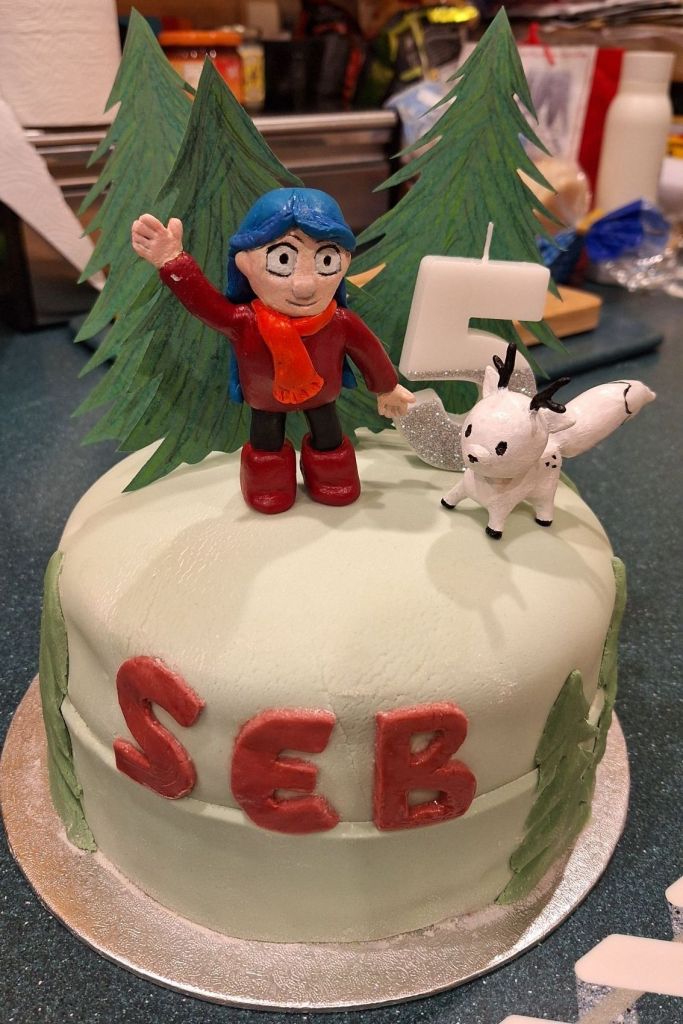
On the related note of moments that we want to hold onto, my son turned five yesterday. We had a small party with friends and family and he seemed to have a wonderful time. He requested a cake themed around a Netflix TV show called Hilda that we’ve been watching together as a family. It’s a lovely show, based on a comic book by Luke Pearson, about a girl who goes off on adventures in a world where magical creatures like elves, trolls, nisse and fairies all exist. Exactly the kind of story I love! I would highly recommend it even if you don’t have children.

The result of evenings slaving away making clay figures for my son’s cake 🎂