Why we love morally grey characters: A psychological breakdown

Most of us will have found ourselves rooting for characters who have done terrible things. Walter White. Villanelle. Loki. Kaz Brekker. Jude Duarte.  These characters lie, manipulate, even kill — yet we follow them, fascinated, hoping that, somehow, things might work out for them in the end.

Morally grey characters have become increasingly popular in modern media, reflecting a trend towards exploring the complexity of human nature. They straddle the line between right and wrong, breaking rules, working towards their own ends rather than the good of society.  

Challenging our own moral code

The psychologist Lawrence Kohlberg theorised that moral reasoning is a skill that people develop over time, largely associated with growing up, although adults may respond to moral choices based on earlier stages of reasoning too. At the lowest level of moral reasoning, our priorities are our own self interest and avoiding punishment from others. Then we move into making choices based on external rules, relying on social norms and societal laws to define what is moral. And then we move into the higher level of reasoning, where we develop our own internal principles. At this level, laws and social norms are not seen as absolute, and we may challenge those rules if they conflict with our own principles.

The morally grey character triggers us to question the moral principles that we live by. If they commit an act that goes against our moral norms, but we can understand why that character has made the decision they have, it then makes us wonder if we would make the same decision in their circumstances. These challenges to our internal moral code are an important part of growing and developing as adults, and doing this through the medium of fictional characters allows for a safe space to mentally experiment with our internal rules, free of real world consequences, much as children will roleplay with their friends.

And often these stories of extremes are fascinating to us. If you don’t belong in society, if you are rejected and unloved, then what is left but to look out for yourself, to give up on complex moral questions and enjoy what you can of the life that you have? Acting without restraint, prioritising our own needs – we stop ourselves from doing this in order to avoid rejection or punishment. We are all part of family or friend units, we are part of the society in which we live, and as a result we make compromises for others in order to continue to fit in with that society. But there is a part of us that can feel excited by the idea of being free to do as we please without consequence, or being strong-willed enough to challenge the parts of society that we disagree with. Morally grey characters don’t compromise. They live the lives that they want to live, damn the consequences, and we will them to succeed, because a part of us wishes we could do the same.

The pleasure of cognitive dissonance

Empathy comes from a neurological process, designed to aid our survival. Our brains are constantly working to understand the intentions of others, and part of that understanding comes from neurologically mirroring their emotional states in ourselves. So when we witness or imagine another person feeling scared, or angry, or hurt, a representation of that state is activated in our own brain, to the point where we can almost feel it in our own bodies. This is also linked with theory of mind – the process by which we try to see the world from the perspective of those around us, in order to aid our understanding both of their actions and of the context around us. Thus, when we read or watch stories about fictional characters, our brains work hard both to try and see what they see and to feel what they feel.

In the case of villains or morally grey characters, this can lead to a feeling of cognitive dissonance, where we can empathise with them and even like them as people, but at the same time we dislike or judge the actions they have engaged in.

Cognitive dissonance can be an uncomfortable feeling, and so our brains seek to resolve it so that we feel better.

We might distance ourselves from our own moral judgement for the sake of the story. We might focus on the mitigating circumstances that could lead a character to act that way. We might compartmentalise, trying to block out the actions that we dislike in order to embrace those that we do. Or we may in fact re-evaluate our definition of good and evil due to our understanding of that character’s choices. But whatever we do – our brains are stimulated by the dilemma. We enjoy being invited to think and feel as we engage with a narrative, and it keeps us paying attention far longer than if the character did not challenge us in this way.The moral complexity of the modern world

Morally grey characters have existed throughout the ages, however, they have increased in popularity in the modern era.

As we have moved into a more secular world, we are less guided by a uniform moral code, dictated to us by those in authority. While governments may prescribe laws to live by, it was previously the realm of religion to speak to morality and ethics. Without religion, society shifts to a more relativistic view of morality, where right and wrong is not always as clear cut as it used to seem, and where we have to look to a range of different sources in order to develop our own internal code.

But also, we now live in a more complex, interconnected world, with access to a wealth of information about other cultures, religions and people. We hear scandals about people in power and are exposed to the grey areas of our societies in ways that we never were before.

So, characters who operate outside of, or conflict with, established and/or corrupt systems resonate with an audience that sees the shades of grey in the world they are living in, where no one is purely good or evil, and the right thing may be dependent on your point of view.

What This Fascination Reveals About Us

At its core, our love for morally grey characters isn’t about rebellion from the social contract, but about recognition. Through them, we see our capacity for contradiction, our potential for harm, and our longing to make sense of a complex world.

They give voice to the parts of us that crave freedom, power, or control — and then make us question what those desires mean.

We learn not just about the characters, but about our own moral elasticity, because deep down, we know: if we’d lived their lives, made their choices, carried their wounds — we might not be that different.

 About the author
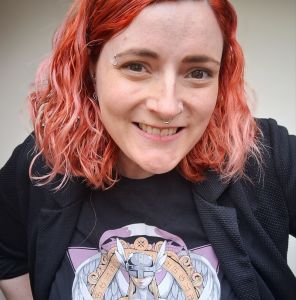
Caroline Ashley is a clinical psychologist who works for the NHS in Scotland. She is also an aspiring fantasy writer and this blog is a way for her to integrate her love of fiction with her knowledge of psychology. Her published short stories are available on her website, or follow the links below to read more of her blog posts.

Navigation

The Hero’s Journey — and Why It Still Matters Today

Ever since humans began to tell stories, they spoke about heroes. They told tales of epic quests of discovery, where warriors slayed monsters and outsmarted the gods, forever changing their lives. The two earliest examples of a story about the hero’s journey date back to ancient Mesopotamia, more than four thousand years ago, but similar stories can be found across the world. So why are heroes so important to us?

What the Hero’s Journey Really Represents

The writer Joseph Campbell famously proposed a template to the hero’s journey, a narrative pattern that these stories tend to follow. He broke the template down into three parts:

  • Departure – this is where the hero is called to adventure. They may embrace this call, or they may initially refuse it due to doubt or fear. Once their journey begins, they may receive aid from a mentor, and then they must leave their known world behind and venture into the unknown.
  • Initiation – the adventure itself, where the hero faces setbacks, temptations and challenges but ultimately finds the strength or skill to achieve their goal.
  • Return – in order to truly succeed, the hero must also manage to return to their old world, to share their achievements with others. This may involve needing to escape from the place they have journeyed to and can be as difficult as the initial adventure. Ultimately, the hero returns transformed by the journey.

These stages very easily mirror any change that we must go through in our lives. When we grow up, we leave the family home, learning to live life without our parents beside us, and we continue to make choices as adults that lead us into the unknown of, for example, a new home, new job, marriage, or children. Each choice will come with setbacks and obstacles, with the hope of a reward at the end of it all, and the experiences change us, shifting our perspective on the world.

The hero’s journey is ultimately about slaying the dragons inside of us – the fears and doubts and insecurities that might hold us back from becoming who we need or want to be. It’s the story of every human who’s ever outgrown a version of themselves and needed to become someone different. In a timeless, universal and profoundly human process, we all must come to terms with the limits of our own strength and skill – accept what we cannot change, and find the courage to change what we can.

But, much as in life, the narrative of the hero’s journey is often more nuanced than stories about people who defeat their enemies and live happily ever after. Not all heroes who set out on their journey will succeed – sometimes fate simply works against them and sometimes the cost of winning is their own life or wellbeing. Oedipus attempts to avoid his prophesied fate and in the process he ultimately causes it to come to pass. Prometheus brings fire to humanity and is severely punished by Zeus for his actions. Katniss Everdeen helps bring about the downfall of a dystopian society, but is so traumatised that she struggles to enjoy the new world she’s helped to create. Frodo destroys the One Ring and saves Middle Earth, but never fully recovers from the emotional and physical wounds caused by his quest.

The purpose of these stories is about the heroes finding meaning and purpose in their lives, rather than happiness or reward. They tell us that sometimes risks are worth taking for the sake of those around us and that even if we fail, we may have achieved something worthwhile along the way.

Why the Hero’s Journey Feels So Relevant Today

These days, the scripts for our lives are less clear than they used to be. In earlier generations, many people followed predictable life paths, where the expectations were passed to them from their parents and their society, influenced by their gender, their social class, their family circumstances. These days, although these factors will still have an influence, our path contains far more options than it used to and finding our own sense of purpose and meaning in life is a major aspect of the modern world.

The latest statistics suggest that more than 20% of the population in the Western world has experienced mental health difficulties, a rate that has steadily increased over time and is becoming more prevalent with young people, in particular. This has been influenced by the impact of the Covid-19 pandemic, the challenges of social media and modern technology, and also by increasing socio-economic pressures, that mean that younger people feel less certain in their future than their parents or grandparents might have done.

The hero’s journey offers a template for making meaning from the difficulties that we feel. We have all found ourselves at some point forced to choose between staying the same, sticking with what we know, and making a change that may or may not work out for the best. We have all found ourselves stuck in moments of self doubt or insecurity, feeling trapped by our circumstances or by our own fears, or faced with a loss that we don’t know how to move on from. Heroes are the people who take risks, who escape from the traps they find themselves in, who face danger and uncertainty with the hope of reward at the end. Sometimes they fail, but they always manage to find the courage to try.

We fall in love with stories like K Pop Demon Hunters, The Lord of The Rings, The Hunger Games or Harry Potter because they tell us that there is meaning to the struggles we face. By finding courage in the midst of hardship, these heroes save the world and become better people, finding a sense of purpose through their journey, even if they don’t get to live happily ever after by the end.

When we read or watch stories about these heroes, we feel inspired by them and we aspire to be more like them in our own lives. Their narratives help us to feel more able to face our own challenges, more confident that it can be worth taking risks.

Integrating the Hero’s Journey into new stories

Just because stories about heroes have been told before, doesn’t mean that there isn’t room for new interpretations of the template, giving a new sense of meaning to the narrative.

The important part in using this template in stories, is to be aware of the true purpose of the narrative, rather than seeing it as a check-list of plot points. The journey is never just about the events that happen around the heroes – it’s about how those events change them as people and allow them to grow and learn from their experiences.

If the journey is so easy that the hero never struggles or questions their goals, then what is the point of the adventure? But also, if they do struggle and they suffer along the way, then there must be meaning in that suffering, something that allows them to move forward in their lives in a way that they wouldn’t have been able to before. In the Epic of Gilgamesh, Gilgamesh loses his best friend after they anger the gods and his fear of death leads him to search for immortality, starting him on a new journey. Heracles kills his family after being driven mad by the goddess Hera, leading him on a quest to atone for his actions. In more modern stories, Katniss Everdeen would never have become a figurehead for a rebellion if she hadn’t had to live through the Hunger Games first. The suffering or loss become a part of the hero’s identity, shaping their future actions.

It’s also important to consider the ‘return’ stage of the journey. Often the victory feels like it’s the end goal, but what does that victory mean for the hero and their world? In Lord of the Rings, Frodo achieved his goal but was so fundamentally changed by his journey that he chose to leave Middle Earth with the elves, unable to return to the way of life he had grown up with. In Ender’s Game, Ender’s unintentional destruction of humanity’s enemies leads him to search for atonement, ultimately starting a new quest to restore those enemies. In Moana, saving Te Fiti allows her people to explore the seas in ways that hadn’t been known for generations.

When done well, the hero’s journey can become a mirror for readers’ own development, with characters that they feel they can relate to. It reminds them that growth and change can hurt, that grief and loss are always painful, that we all make mistakes, but that there is also hope that we can recover from these challenges and find either meaning or happiness along the way.


About the Author

Caroline Ashley is a clinical psychologist who works for the NHS in Scotland. She is also an aspiring fantasy writer and this blog is a way for her to integrate her love of fiction with her knowledge of psychology. Her published short stories are available on her website, or follow the links below to read more of her blog posts.

Navigation